Reviewed by Nan J. Bauer

 The math is basic: Food is life. Withholding it is power. It’s an equation we see daily to horrible effect in the current Palestinian and Sudanese genocides; what bombs and bullets don’t kill, starvation finishes, less efficiently and with greater cruelty. We don’t need to look hard to find even more examples — including, right here in the U.S., the Trump administration’s capricious restriction and denial of SNAP benefits for families who, without them, simply don’t eat.
But what does the same food/power equation mean on a one-to-one scale? Particularly when the person withholds food from herself — and is female? Why does my brain go to Karen Carpenter and Princess Diana, to models and ballet dancers and gymnasts and their respective sheens of tainted privilege and glamor? Why the insistence that eating disorders are all about outside pressure from the world mixed with internalized pressure from personal demons?
What if, instead of tabloidizing a refusal to eat, we saw it as a clear and deeply present statement that the personal and the political are indeed the same thing, that something is messed up and needs to be changed and that that something isn’t the person who, for whatever reason, can’t make herself eat?
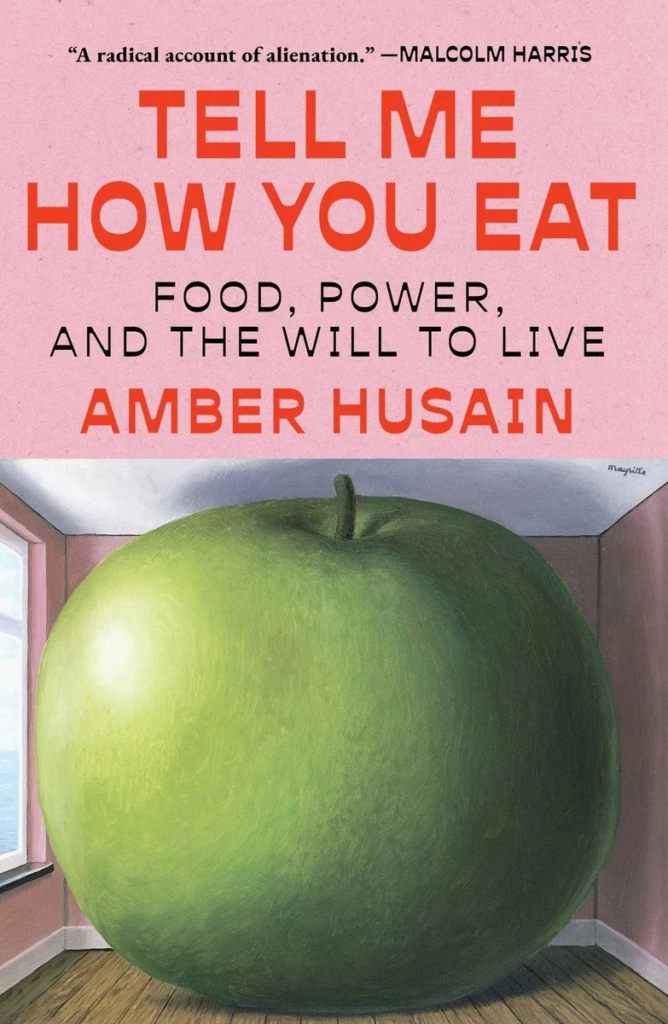
Essayist and author Amber Husain never flinches from tough questions like these in her new book, Tell Me How You Eat: Food, Power, and the Will to Live (Washington Square Press/Atria; Feb. 2026). It’s her third, and second specifically about food and the issues that surround it. Here, she chronicles a journey away from eating that began during the pandemic. Safely sequestered with her supportive and respectful partner, an accomplished cook, she just stopped being interested in food. She felt no pressure from society to be thin, and no unresolved issues about personal agency. It was simply that given the bleak quarantine view, she could see no point in eating.
At a check-up, alarmed medical personnel immediately offered her a choice: enrolling in hospital “daycare,” an outpatient treatment that entailed a “a total surrender of adult life to supervised eating routines,” or a four-month course of weekly group therapy in a treatment program called MANTRA. She chose the latter, then discovered the acronym’s meaning and origin: “the Maudsley Model of Anorexia Nervosa Treatment for Adults…named for a hospital named for a man who preached that mental illness was a form of ‘moral insanity.’ ” Within MANTRA, “The hope is that [the participants] will recognize the error in themselves and learn to see the world like normal people.” In other words, the world doesn’t need to change. You do.
Halfway through the program, Husain abandoned it in favor of psilocybin treatments — synthetic versions of mushrooms, which sent her “straight into a version of twinkling hell.” Her psychedelic guides offered little help; “[t]hey wanted their participants to answer the kinds of questions I wanted to ask.”
So Husain decided to find the answers for herself, poring through an enormous range of approaches to eating and not eating across centuries. Much of the book’s great pleasure is seeing which anecdotes across time she weaves with her own path.
First up: the Minnesota Starvation Experiment, a post-WWII study conducted with men as the subjects that came to the unshocking conclusion that severe food deprivation makes people crazy, even when they sign up for it. She studies self-starving women in history, including Simone Weil, Karl Marx’s daughter Eleanor, and “holy anorexics,” groups of Italian nuns between the thirteenth and fifteenth centuries who sought a sort of ecstasy via deprivation. In all cases, an altruistic goal underlies the starvation. But unlike the examples of people who went on hunger strikes in order to affect change — including suffragettes, imprisoned IRA fighters, and Gandhi — these smaller-scale, more personal decisions to not eat accomplished little other than wreaking havoc on the bodies of those who chose to starve.
A full spectrum of eating styles gets put under a microscope: vegetarianism, including its links to Fascism (she herself is vegan), as well as the gluttony of Roman orgies. Celebrity chefs Anthony Bourdain and Nigella Lawson make appearances. The quest turns poetic when we join Audre Lorde traipsing through Greenwich Village and attending banquets thrown by and for feminists in Queens, and Diane di Prima, who created the Diggers in San Francisco, who conceived of collective dining as a revolutionary act.
When she’s invited by a family friend to serve as a chef for a retreat, Husain’s instinct is to resist; she does not want to literally feed the stereotype of the woman who keeps her mouth shut tight while lavishly pushing heaping plates at others in order to both control them and vicariously experience flavor. Still, she takes the gig. And while she’s not surprised that it’s unfulfilling, her telling is fresh and suspenseful; will this work? What will?
Always, she rejects the idea that all she needs to do is eat and cook and enjoy food and her problems will be solved. Husain knows that her lack of interest in food is not a personal failing, but a vital quest to rediscover conviction and meaning in a world that, for a post-Brexit British woman, continues to feel hopeless.
And finally, light shines in the darkness when she discovers the Right to Food movement, one informed by the Black Panthers’ revolutionary food program. Through Right to Food, she discovers “occasions where eating felt generative of something beyond myself.”
Early in the book, Husain admits, “I would like to have been able to write one of those books you might have read about the magic of healing through food. Unfortunately, it seems there is nothing inherently healing about it.” Yet by generously sharing her own journey, she emphasizes that healing is possible — just not through lovingly curating every expensive bite like a Food Network chef. With honesty, wit, and her remarkable curiosity, her exploration of eating and not eating, feeding and not feeding helps us envision on our own what all of it could mean for our collective future — a healing that goes beyond the set of numbers that satisfies doctors.
Tell Me How You Eat’s stunning and quiet conclusion feels more like a beginning than an ending. Husain dares to say where true power lives: in feeding, not starving.
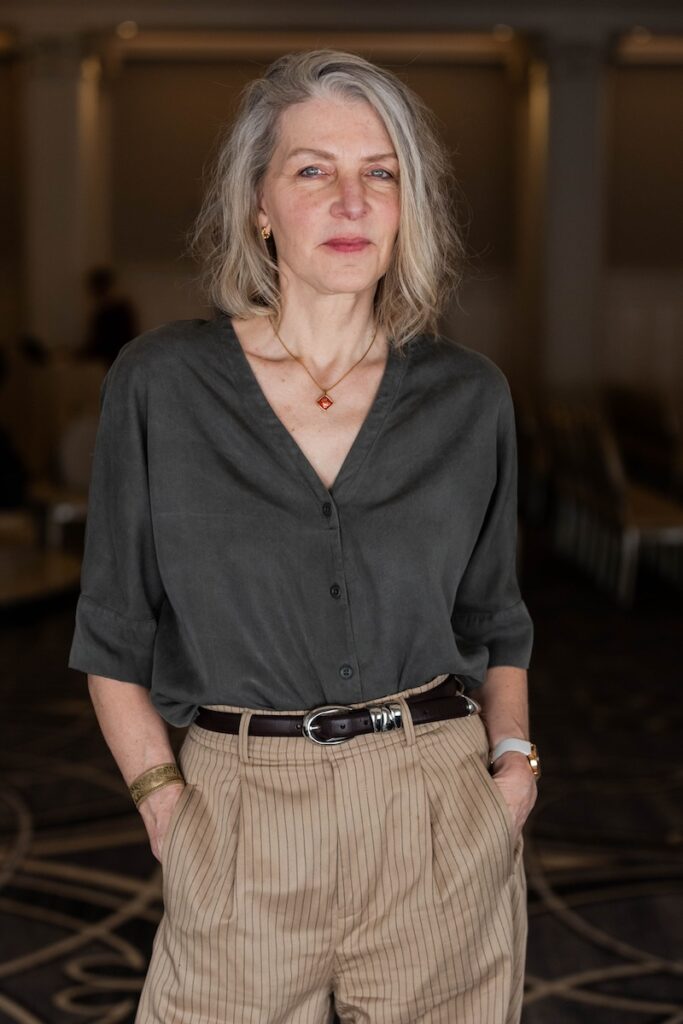 Nan Bauer is a writer currently based in Southeast Michigan, and is completing a memoir on life on the front lines of AIDS during the late 80s in New York and Key West. She has written about food and culture for Ann Arbor Current, Toledo City Paper, Edible WOW, the New York Times, and other publications. She is a decent cook and excellent at riding camels. Find out more at nanjbauer.com and/or follow her @nanjbauer.