

 As a busy hematologist and oncologist working at a well-meaning nonprofit hospital, I regularly get emails from our higher-ups about the latest system-wide effort to reduce burnout among physicians. While the missives are often corny and full of corporate-speak, I can understand the sentiment behind them.
A 2026 survey from the American Medical Association found that over 40 percent of practicing physicians were experiencing at least one symptom of burnout — emotional exhaustion, cynicism, or a decreased sense of self-efficacy. While the prevalence of burnout among physicians and other medical professionals is steadily declining from the darkest days of the COVID-19 pandemic, the results of surveys like these show how much more work there is to be done.
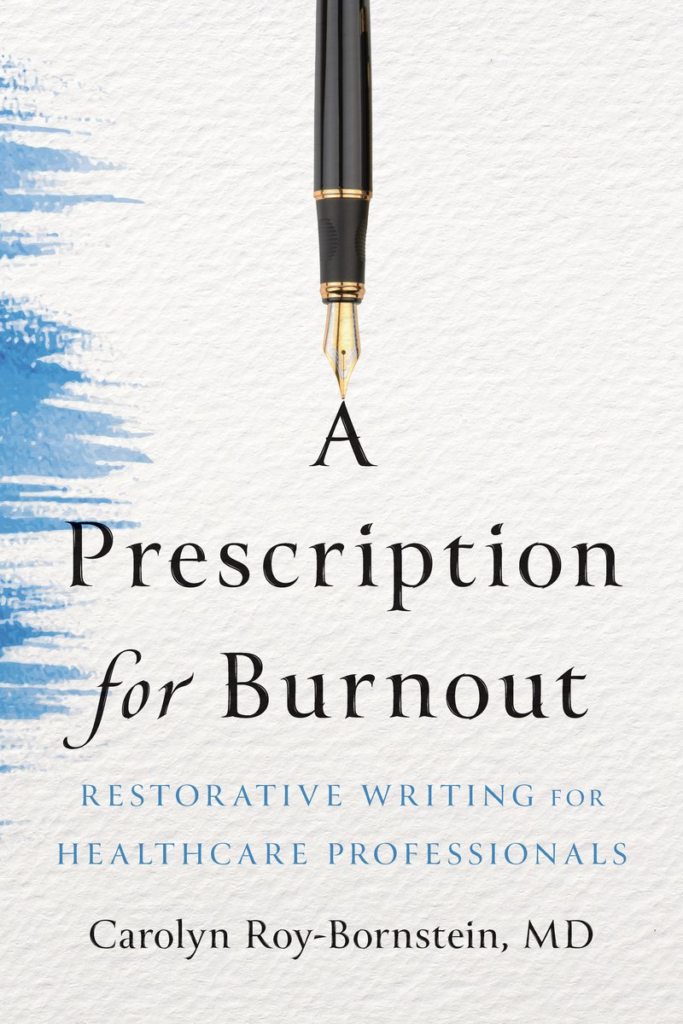
Dr. Carolyn Roy-Bornstein’s book A Prescription for Burnout: Restorative Writing for Medical Professionals (Johns Hopkins University Press; 2026) is part of this ongoing fight. Roy-Bornstein, who came to a long career as a pediatrician after 10 years as a registered nurse, began her practice of reflective writing while caring for her son, who suffered a traumatic brain injury after being hit by a drunk driver. Her writing allowed her to heal her own emotional wounds and connect with others who’d suffered similar tragedies, even inspiring her to edit an anthology of stories from patients, families, and caregivers. She called upon these skills when she was later caring for her foster daughter, who spent years dealing with a devastating eating disorder. Her regular journaling was how she made sense of her family’s suffering. She later expanded this work into a memoir.
As Roy-Bornstein neared retirement from clinical practice, it felt natural for her to join a family medicine residency training program as a writer-in-residence. The role would allow her not only to deepen her practice, but also to pass down what she had learned about writing’s power to heal. She’d seen the same statistics I had about burnout in medicine, about doctors and nurses cutting their hours or leaving practice completely. Regular reflective writing had helped her weather incredible stress in own life, and now she felt it could help doctors-in-training endure all that they’d face practicing medicine in a broken system.
This book is the culmination of this lifetime of care. Each of its three sections tackles one of the three elements of occupational burnout first outlined by psychologist Christina Maslach and later assessed by organizations like the American Medical Association — emotional exhaustion, cynicism, and decreased self-efficacy. The sections aren’t meant to be quickly read through as one overarching narrative. Rather, each is broken down into smaller chapters with titles like “Writing to Find the Wisdom Within” and “Writing to Bear Witness.” While Roy-Bornstein does share stories from her years as a doctor and caregiver, the claims she makes in each chapter rest on meticulously cited scientific research. “We are people of science after all,” she writes. “We like our recommendations to be evidence-based.”
The book’s real core, however, are the “prescriptions” which end each chapter. These are writing prompts meant to guide the reader on their own journey inwards, reconnecting them with sources of strength. As Roy-Bornstein notes, “Prescriptions are powerful. They mean something is important.” The writing elicited by these prompts doesn’t necessarily need to be pretty, and there aren’t any right or wrong answers. Rather, their function is to help the reader gain perspective on difficult emotions, and, in doing so, begin a crucial process of “affiliation” — bringing them closer to their colleagues, their patients, and ultimately themselves. The chapters and their prescriptions blur together on a front-to-back read-through, but they come into much better focus when used as part of a daily or weekly writing exercise. Burned out medical professionals need to find a way back to their humanity. These prescriptions outline one way how.
While I appreciate how Roy-Bornstein highlights how scientific research supports the claims she makes in her book, I resonate most with the attitude of care she brought into each chapter. Through the stories she shares, it’s clear how her faith in the power of writing was born from her love for her children, her patients, and her students. And that attitude is also evident in her use of the first person plural, which brings her into the trenches alongside the reader, casting herself less as an authority passing down incontrovertible wisdom and more like a fellow doctor or nurse working through the same difficulties we are.
Roy-Bornstein anticipates my criticism that hers is a book of individual solutions to what is clearly a systemic problem. She agrees that burnout among medical professionals cannot be fully solved without addressing the shortfalls of a corporatized system of care that continually prioritizes profit over people, writing that “simply advocating for physician self-care or asking nurses to develop personal resilience is not addressing the root causes of burnout and distress in the practice environment.” Yet, while not obviating the need for deeper reforms, she argues that nurturing skills through writing like self-compassion, mindfulness, and the capacity for wonder can only help in the struggle to maintain our inner resources in the face of all that seeks to drain them. This practice can thus be a way to strengthen our sense of agency while we fight for structural changes to the way care is delivered in this country.
While I’ve been fortunate to avoid major burnout in my career so far, caring for cancer patients can often be an emotionally taxing vocation, and the burden of documentation and difficult decisions are often overwhelming. I can see how the prescriptions in this book could be a balm on those days my work feels especially heavy, and how they could bloom into something more regular, a better means of self-preservation than whatever will be in the next e-mail about the joy of medicine I receive from hospital administration. And I’ll be sure to pass it along to colleagues who are struggling, especially those willing to engage with the course of deep emotional work it outlines.
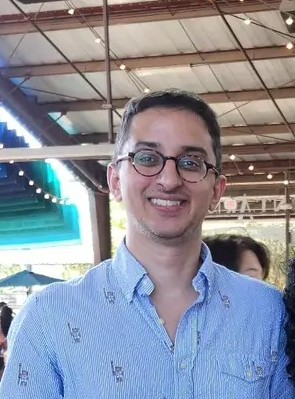 Born in small town Oklahoma, Indian-American writer Kirtan Nautiyal is now a practicing hematologist and oncologist near Houston, Texas. His debut memoir-in-essays, An End is A Beginning, will be published in early 2027 with the University of North Carolina Press. His work has also appeared in The Guardian, Aeon, Electric Literature, Longreads and elsewhere. Visit his website at www.kirtannautiyal.com or find him on Instagram @pizzachampion to learn more about his upcoming work.
Editor’s note: In full disclosure, Carolyn Roy-Bornstein is also a volunteer contributor to Hippocampus Magazine.