
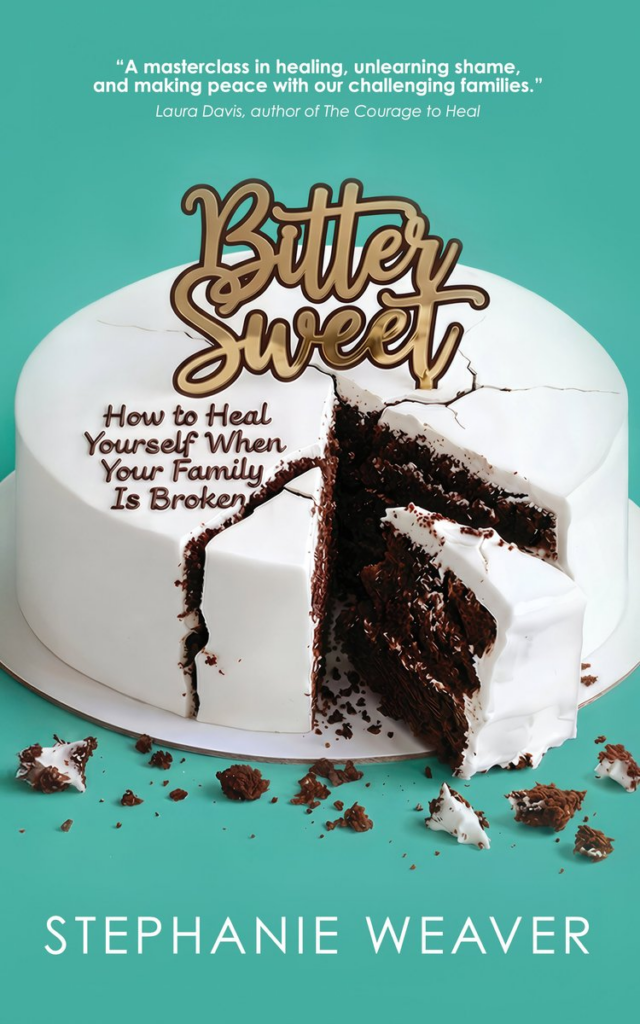
 Bitter, Sweet: How to Heal Yourself When Your Family Is Broken (Woodhall Press; April 2026) by Stephanie Weaver explores the devastating impact of child sexual abuse (CSA) on its survivors. A hybrid self-help memoir, the first part of the book details Weaver’s realization that she was a victim of CSA and, more horrifyingly, at the hands of her own father.
The second part of the book reviews what Weaver did to heal her relationship with herself. She tries formal therapy, religious groups, and alternative healing modalities, which she details at length. Weaver does all this work in the late 80s and 90s, when cultural acceptance and understanding about trauma, therapy and alternative healing methods was not as common as it is now, making it all the more impressive an examination.
At the outset, Weaver makes it clear that this is her personal journey. Her story is neatly contrasted with that of her sister, who remained estranged from their parents until their deaths. Weaver does not judge her sister, nor anyone who decides to stay estranged from family members. She is simply speaking to her experience, and recounts the tools she used to reestablish contact once she realized that was what she wanted. Weaver is suggestive without being prescriptive: she describes the therapies and alternative modalities she used without false promises that they will work for everyone.
I never thought I’d say a book about CSA and family dysfunction was compulsively readable, but it was. Weaver’s writing is approachable, and secure in the telling. Most of the events that Weaver describes happened over 30 years ago; the most recent ones are nearly a decade old. Meaning that Weaver has clearly had time to process and analyze what has happened to her without drawing directly from the emotion itself. Write from the scar, not the wound is how the popular adage goes, and Weaver puts that on full display here.
This book can be for anyone who has dealt with family estrangement, and has an interest in reopening those lines of communication, who felt as Weaver did that ‘something was missing.’ I would recommend reading trigger warnings, as the book does contain some graphic descriptions, especially when Weaver describes the abuse she and her siblings endured. It is not self-help per se, but an offering of how one person managed to regain contact. The book can serve as a road map, or merely an opportunity for reflection. While unusual in the self-help space, the subtitle implies the book is more self-help than it actually is.
There is a healthy resources section at the end, including many of the books that Weaver herself used and referenced in the text. Weaver annotates each book to explain what she used it for, and offers historical context as needed.
Weaver has published books previously, but this is her first memoir. She directly addresses the question of why now, and the skepticism that so many victims of sexual assault face. Weaver points out the obvious: if she was making this up, why would she make up trauma about incest? Especially involving her father, whose revelation blew up her family. I doubt I could ever forgive my family for the trauma she endured, but the author shows a tremendous amount of grace.
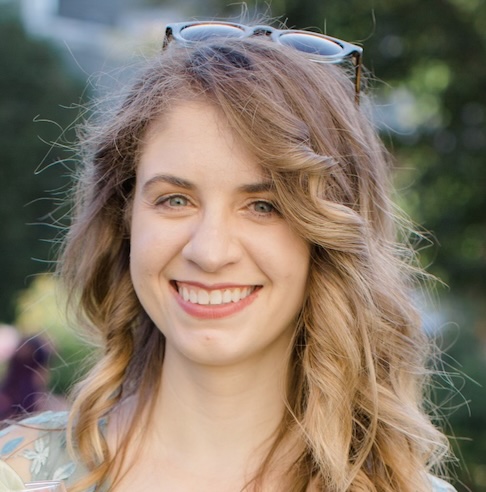 Marissa Gallerani is a queer and disabled writer and teacher living in Providence, Rhode Island. She received her MFA from The Newport MFA at Salve Regina, and has taught at multiple institutions of higher education including the New England Institute of Technology, Salve Regina University, and Write or Die. She has been published in The Harvard Review Online, the public’s radio, and The Financial Diet, among others. Marissa’s Substack, The Chaotic Reader, details her wide-ranging reading adventures. A life-long SFF fan, Marissa is currently at work on a science fantasy novel.