
Reviewed by Candace Cahill

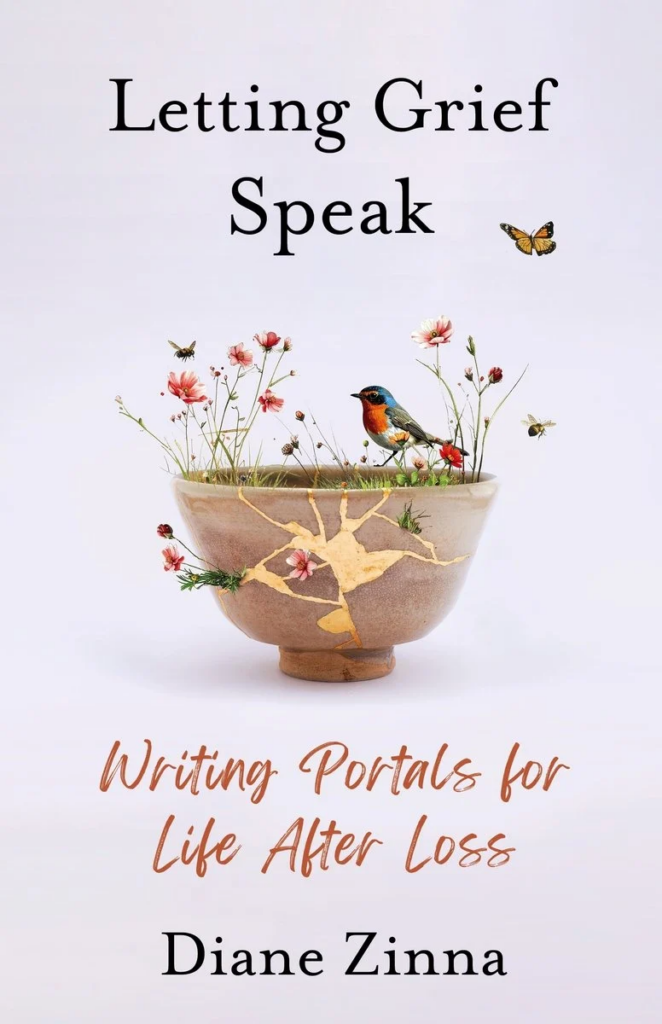
There is a particular cruelty in grief’s relationship to language. It arrives and takes the words with it, leaving you standing on what Diane Zinna calls “another side,” where words become hard to find, and harder still to trust. Letting Grief Speak: Writing Portals for Life After Loss (Columbia University Press; July 2026) is a book built on the conviction that writing can be a tool to find and reclaim words in the face of loss.
Zinna, a novelist and grief writing facilitator, structures the book around what she calls “portals” — prompts organized by mode rather than emotion. Craft, body, healing, structure, ekphrasis, point of view, hermit crab: the categories give grievers not a therapy framework, but a writer’s toolkit, and that distinction matters.
I came to this book as a memoirist and essayist whose work centers on adoption grief, relinquishment, reunion, and identity: losses that don’t always get named as losses at all. I have spent years learning to trust the page with the things that resist easy telling. And still, reading Letting Grief Speak, I found myself stopping, underlining, sitting with Zinna’s knowledge and guidance.
The focus on craft, she argues, creates useful distance from raw feeling: not to avoid it, but to approach it with something like agency. Focusing on craft “can also provide a sense of control,” she writes, and this is an insight that most grief writing guides skip entirely. So often, writers — especially those carrying complicated grief — are too quick to judge themselves on the page before the words have had a chance to form. Zinna interrupts that reflex. She offers structure not as a constraint but as a lifeline, and for readers who don’t naturally journal, or who find the blank page more threatening than inviting, that structure is a genuine gift.
The book’s other distinguishing quality is its community of voices: Zinna weaves in responses from participants in her Sunday grief writing sessions. This creates a feeling of community; readers who come to this book in isolation find themselves in a room full of people. As someone who co-facilitates grief writing groups, I immediately recognized what Zinna was doing and why it works: grief convinces us that we are singular in our suffering, and these other voices on the page say otherwise.
The prompts themselves range from the quietly radical to the playfully structural. A wind telephone on a hill. A crossword puzzle whose clues map a loss. A choose-your-own-adventure story that spotlights moments of choice embedded in grief. A fairy tale. A classified ad. I found the hermit crab forms — borrowed containers that hold new emotional freight — especially generative. Zinna wears her inventiveness lightly, never letting craft become a barrier to feeling. The scent prompt, which asks writers to follow an olfactory thread into memory, struck me as one of the most instinctively true in the book. Scent bypasses the editorial mind. It goes straight to the place where grief actually lives.
Not every portal will land for every reader. A Mother’s Day prompt written from the child’s perspective left me — as a first mother whose son was relinquished to adoption — with my own kind of missing, a portal adjacent to the one offered. But Zinna anticipates this generously. She builds alternatives into many prompts, and even asks, What do you never want to lose from this grief? This is not a book about moving on. It is a book about learning to live with grief without being flattened by it — a distinction Zinna makes with both precision and tenderness.
I read this book as a reviewer, which means I moved through it with more critical distance than the prompts deserve. I engaged where I could and paused where I wanted to linger. And even so, I got more out of it than I expected. The insights landed, and I also felt, again and again, the particular ache of portals I wanted to walk through more slowly.
What I look forward to most is returning to it without a deadline. Because Letting Grief Speak is the kind of book that will keep giving, not just once but across time. Writing changes us. Grief changes us. The writer who returns to the wind telephone prompt a year from now will not be the same writer who first climbed that imagined hill. Each portal, revisited, will yield something new, because we are always somewhere new inside our losses, whether we can see it yet or not.
Letting Grief Speak is most useful to writers who already sense they have something to say but can’t find the door in, and to facilitators building supported writing spaces for others. It is warm where grief writing guides can be clinical, structurally ambitious where they can be vague. Zinna’s central metaphor — that grief is unexpressed love, and that writing is how we let it speak—earns its place by the end. It doesn’t resolve anything. It just makes room.
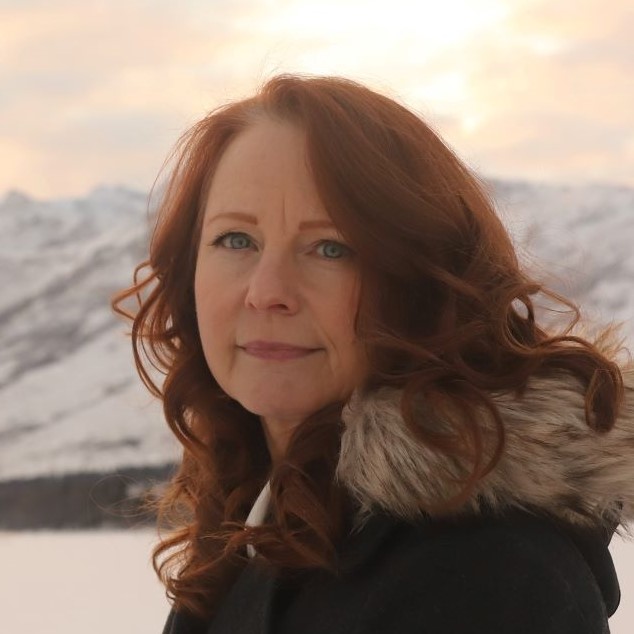 Candace Cahill is a first mother, late-discovery adoptee, memoirist, and essayist whose work explores genetic separation, disenfranchised grief, and what she calls liminal loss — the grief of those who are neither fully lost nor fully found. Her memoir, Goodbye Again, was published by Legacy Book Press in 2022. She lives in Alaska, within sight of Denali.
Beautiful review, Candace! I love Diane and her work so getting to read your review of her radically wonderful practice and community is a particular treat 🩷
What a wonderful review. Diane is a treasure and the book is a gift.