Reviewed by Chanda Daniels

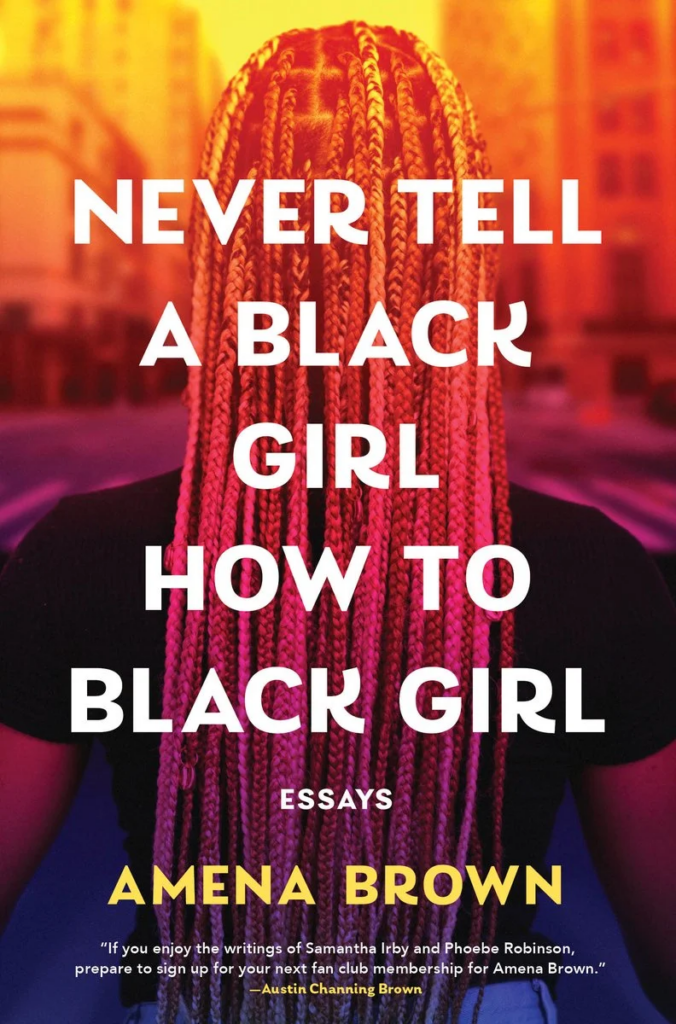
“To be a Black girl is both a noun and a verb,” opens Amena Brown in Never Tell a Black Girl How to Black Girl (Penguin Random House; 2026). There is the noun, the immutable fact of being a Black girl. Then there is the verb, the becoming. Before Brown ever defines the distinction, I, like many Black women, already know it intimately. There is a moment in every Black girl’s life where they are told that you are doing something just like or very opposite of the typical idea of who a Black girl is meant to be. Brown’s writing explores what it means to live in that space between.
The collection captures the nuances of Black American womanhood through its universal experiences: wash days, expectations of marriage, family dynamics, faith, and Black pop culture, etc. The writing embodies the feeling of sitting on the floor getting your hair braided as your mom tells you stories from past generations, or what it must have felt like piling into her dorm room at Spelman to talk about everything and nothing in the world of being a Black girl. She constructs a portrait of Black womanhood that feels at once deeply personal and remarkably familiar. So much so, I wondered if I ever had an original experience in my entire life.
Brown spends a lot of time at the beginning chronicling her relationship with her hair, in a way that mirrors the hours of time we as Black women dedicate to our hair regularly. From her first press and curl, to her long term relationship with relaxers, to the rules on how not to embarrass yourself at the salon, she weaves through these moments with humor and affection, showing how our hair functions as a repository for our identity, self-expression, and community.
The later essays become a meditation on the simple elements that shape identity. Her finally hosting Thanksgiving becomes a reflection on inheritance. Finding the right Black woman therapist becomes a lesson in what it means to be understood. A story about going natural after losing her job unpacks reinvention. Essays on The Real Housewives of Atlanta, gospel music, and celebrity encounters feel purposeful, illustrating the cultural touchstones that help shape identity and belonging. Through using the small moments of her life and playing with structure—traditional essays sit alongside poems, letters, prayers, and lists—the variety allows an honest depiction of all the faucets of her life.
At the center of the book is a rejection of the idea that there is a singular way to be a Black woman.
The title itself serves as both a warning and a declaration. Brown pushes against the expectation that Black women should perform authenticity according to someone else’s standards. Whether the topic is navigating dating, body image, faith, motherhood, or career, she consistently returns to the notion that freedom requires rejecting rigid definitions of who Black women are supposed to be. The collection’s greatest strength is that it never delivers this message as a lecture. Instead, Brown shows us this through stories filled with warmth, vulnerability, and humor. Together, they create a portrait of Black womanhood that feels expansive enough to hold contradiction, joy, grief, uncertainty, and growth.
This tension feels particularly resonant in this cultural moment, especially as Black women exist in a landscape where expectations placed on us are endless, and often contradictory and our existence is inherently political. Brown’s response is refreshingly uncomplicated: Black women deserve the freedom to choose for themselves.
For readers who enjoyed works like Meaty by Samantha Irby or Morgan Jerkins’ This Will Be My Undoing, Brown’s collection offers a similarly thoughtful examination of Black womanhood. Her voice is distinctly her own and I appreciate the memoir being refreshingly light, when so many of our stories are told only through the most traumatic experiences. Brown manages to strike a balance that feels most genuine to the reality of our experiences.
By the end, I found myself returning to the opening line. The book explores what it means for Black girlhood to be both a noun and a verb, the result feels like being handed language for something you have always known. Brown reminds us that many of the experiences we believe are uniquely ours and are part of a larger inheritance shared by generations of Black women.
In a culture that is constantly attempting to define Black women from the outside, Never Tell a Black Girl How to Black Girl insists on something more authentic and powerful: that we are the experts of our own narratives, and it’s a reminder that I needed to hear.
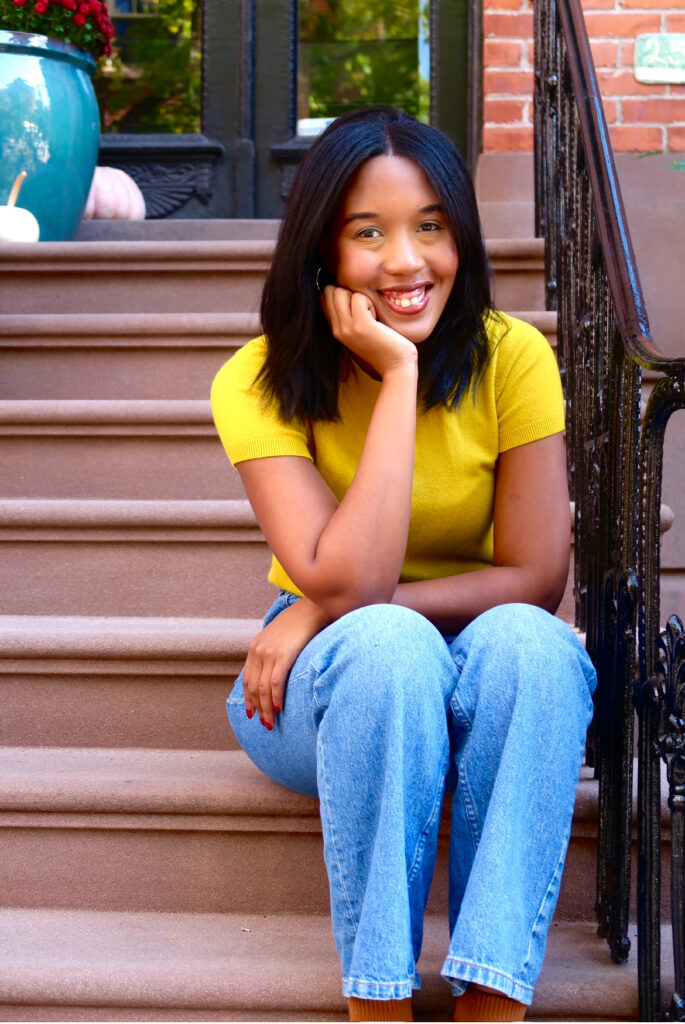 Chanda is a writer focused on the intersection of politics, culture, and identity, and the author of the newsletter Ok So Hear Me Out…, where she examines these questions through a personal lens. Her work has been published in The New York Times and Courier News and she’s been featured in Vox and Washingtonian Magazine.