Reviewed by Kate Lewis

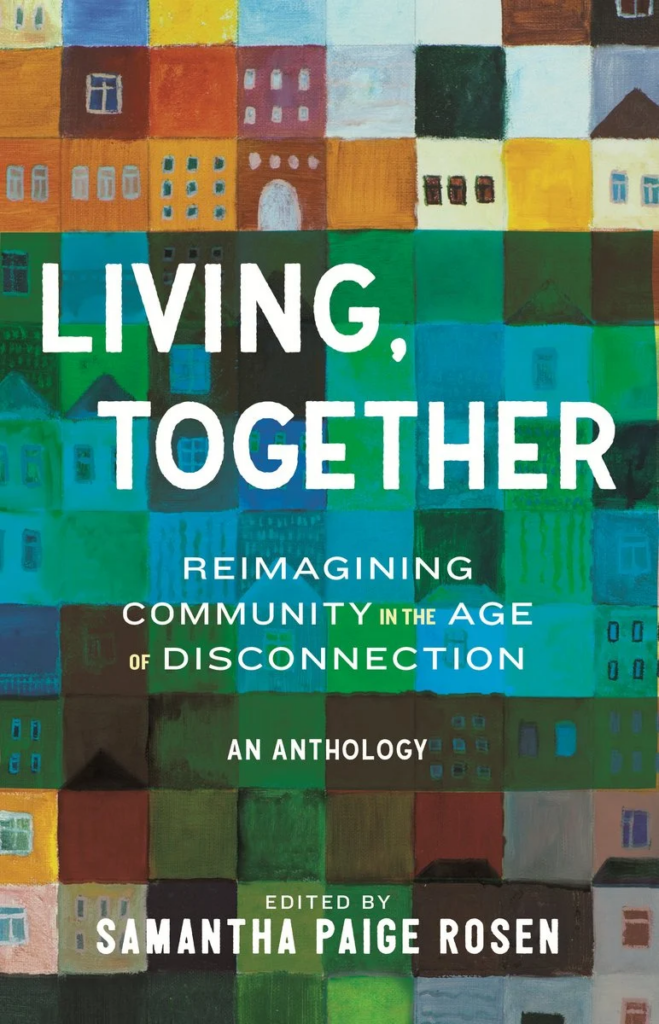
Living, Together: Reimagining Community in the Age of Disconnection, Edited by Samantha Paige Rosen
The homes where we spend our days — and who we share them with — shape our lives immeasurably. Our childhood homes set the foundation for our earliest selves, and our first living spaces on our own offer freedom: places we make our own rules, roommates whose particular habits offer an alternate way of being, walls we decorate to our own desires. Many Americans travel from their single-family childhood home to roommates to marriage to a single-family adult home, and often follow this path without question.
Yet at a time when housing costs are crushing and social media has often led to greater isolation, for many, this singular vision of how to live can be limiting. The excellent Living, Together: Reimagining Community in the Age of Disconnection (Beacon Press; July 2026) takes on all these complex factors — economic, social, emotional — and weaves together a compelling account from more than twenty writers who have forged new and different ways of living than this American norm.
Editor Samantha Paige Rosen brought the anthology together to illuminate more stories like hers: she moved back in with her parents for years and was astounded at the ease and joy communal living brought. The book traces a wide variety of the ways living in community changes lives: Simone Gorrindo writes of the unexpected bonds forged between military spouses while their husbands are deployed in Afghanistan; Hannah Grieco has an electric piece on choosing to live with her parents; Gabrielle Korn turns an unexpected AirBnB into a part-time artist residency as a way to subvert capitalistic societal expectations. Home is exquisitely rendered throughout as belonging, as sense of self, as respite.
In the twenty years I’ve been an adult, I’ve lived in fourteen different homes, with friends and lovers, with roommates and without. The anthology excels at crystalizing each of these experiences within each piece and drawing them together as a cohesive whole that paints not just how we could live — but, for many, how we already do.
Some were drawn to communal living by circumstance, some by choice, by intrigue, or by curiosity. Many of the pieces highlight the happiness each writer found in living out their values. “I’ve hacked adulthood,” Rhaina Cohen writes of living in a house with her husband and friends, calling her life a “continuous sleepover.” Several mark both the immense joys and the challenges. Sarah Thankam Mathews tracks how founding the mutual aid collective Bed-Stuy Strong in the early days of the Covid lockdown resulted in enormous hope as well as exhaustion. It takes extensive work, kindness, and camaraderie to build communities, and the work as a whole is frank about both the effort required and the toll that effort can sometimes take.
Rosen’s anthology also deftly highlights how much extensive repair is needed to correct historical wrongs and rebuild deliberately damaged communities. Rodney M. Bordeaux writes from a Native Nations perspective about the Sicangu Lakota, his tribal nation, whose culture was decimated by colonization, forced reservations, and the oppressive assimilation policies the United States enacted through federal boarding schools. The effects of redlining, racial discrimination, and environmental destruction echo through Amanda E. Machado’s essay. “As a kid,” she writes, “I still believed that storybook houses inherently could create a storybook life.”
Themes of chosen family abound, and the anthology is richer for it. More than accounts of walkable communities and intergenerational connection, the anthology dives deep into what kinds of support make our lives not only meaningful, but vibrant and incredible. Jake Montano (aka Imelda Glucose) writes about the family he found in the drag community as a member of a house called the Rice Rockettes, whose supports and traditions are a direct response to the oppression many members historically faced from their people and places of origin.
The anthology is divided into three sections: Family Homes, Intentional Communities, and Beyond Housing. The structure works well — beginning with intimate stories of those to whom we begin our lives connected to most closely, then gradually widening the spectrum of possibility for how we might choose to live. Beyond the personal experiences each writer shares through essay, the anthology is interspersed with Q&A’s with activists and advocates who have forged strong communities in ways that also offer a path toward new traditions: Suanne Carlson’s resources help those drawn to nomadic lifestyles make their way; Mary Anne Adams founded ZAMI NOBLA: National Organization of Black Lesbians on Aging to help care for elders in her community for whom independence has often been hard-fought and hard-won; Adam Meyer’s dinner parties create companionship and a strong sense of community in Jackson Hole, Wyoming. The Q&A’s offer a lovely counterbalance to the essays, allowing the reader to consider both the practicalities and concrete considerations in making a more communal lifestyle possible.
The anthology also expanded my awareness of intentionally designed communities, such as Moishe House, which provides housing and connection for Jewish youth; and Hope Meadows, which brings together intergenerational living for seniors and families adopting foster youth. Each piece and place is connected by this intentionality, all the ways we build something bigger than ourselves, concentrated in the most intimate of spaces: our very homes.
The work doesn’t only introduce alternate visions of home, it is frank about how many of these community-oriented projects are in need of financial support to continue to thrive. The benefits to the people living there are immense, and more advocacy is needed to truly shift how we live and what we make possible.
As a writer who has lived in a variety of non-traditional homes — a French-doored closet in California’s Manhattan Beach where birds nested in the interior eaves of the room and flew around the ceiling while I slept, a military base in Japan, a home near the Chesapeake Bay where I lived with my children while my partner worked on ships halfway around the world — these stories of friendship and found families, community and communal support all strike at deeper meaning. Home is not only where the heart is; we have a responsibility to make homes for everyone in our communities that reflect our hearts.
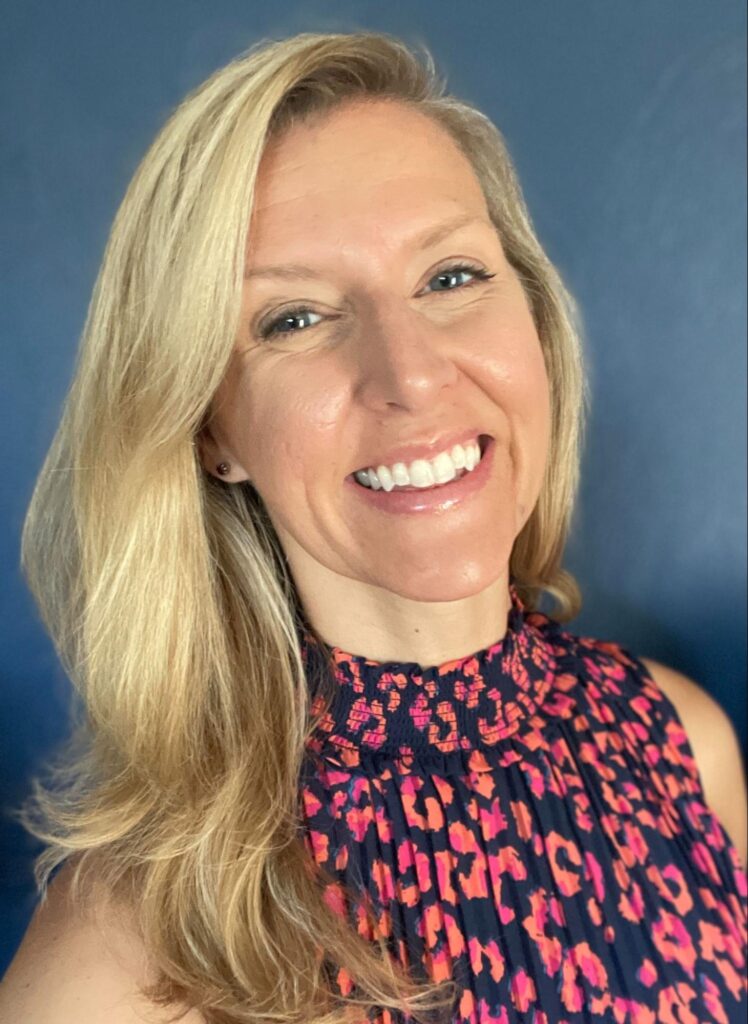 Kate Lewis’ writing has been featured in The New York Times, The Washington Post, The Wall Street Journal, and more. She also writes The Village on Substack, devoted to sharing stories of building community and craft. Find her online @katehasthoughts.