Reviewed by Marissa Gallerani

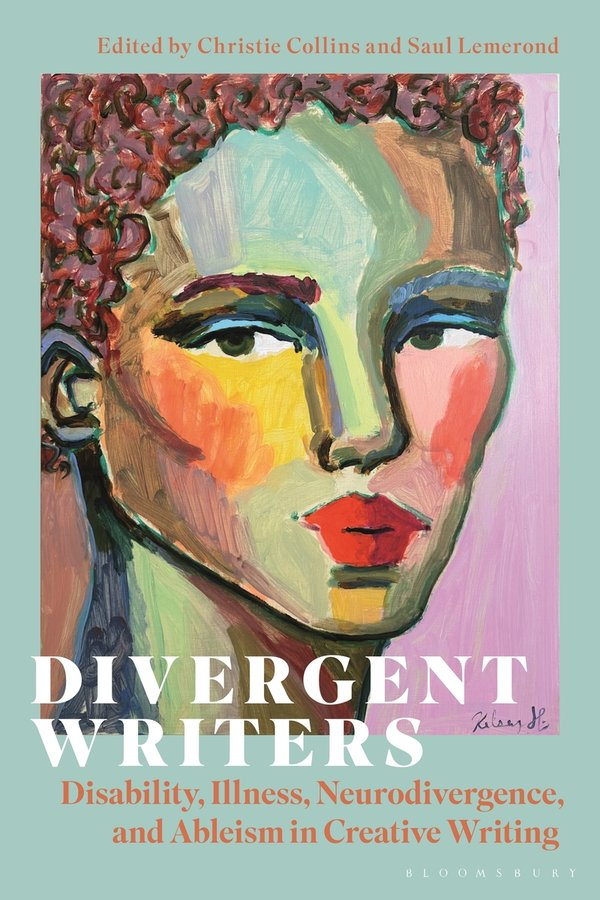 Divergent Writers: Disability, Illness, Neurodivergence and Ableism in Creative Writing (Bloomsbury Academic; April 2026) is a groundbreaking anthology of writers exploring the impact of their disabilities, chronic illnesses, and neurodivergence on their writing practice.
Edited by Christie Collins and Saul Lemerond, the collection features 19 writers from a variety of English-speaking countries as they engage with their relationship with creative writing, and explore how the traditional models often exclude disabled and neurodivergent students.
Divergent Writers shines as a pedagogical tool for teaching creative writing. Much like Craft in the Real World by Matthew Salesses, this is a reference text every creative writing instructor should have. As someone who has a disability and chronic illness, the book made me reconsider my own teaching practices and reevaluate how I can continue to be more inclusive in the classroom.
However, the collection has value beyond the classroom—all of the essays can be read and enjoyed by the casual reader. While many of the essays are more academic in style, most include memoir and creative writing. A few are structured in unconventional ways (like Q&As.) Saul Lemerond’s and Grace Quantok’s essays were particular favorites. Each essay has a bibliography, and some include reference materials should the reader wish to investigate further.
The unifying theme of the collection is disability and its intersection with creative writing. Disability is the one identity that a person can suddenly ‘become’ at any point in their life. “Disability can be seen as …the one form of diversity that can intersect with all other identities,” editor Christie Collins notes. The book emphasizes this heavily, that if a person lives long enough, they will become disabled in some way. Western culture does a poor job of addressing it and making accommodations, and this work is pivotal in continuing that conversation. Writers in this collection offer their own experiences of exclusion in creative writing spaces, as well as suggestions for how to be more inclusive, and what that has done for their writing practices.
The book sets out what it intends to do—and opens a conversation for more focused works on specific disabilities and neurodivergences. Divergent Writers covers a wide range of topics within both fields of disability and creative writing. Collins notes that the editors were “intentionally broad in scope,” and did not intend to serve as the definitive text on the subject. In fact, they encourage other writers to contribute their own voices to the conversation. As Christie Collins writes in her introduction, “every facet of my life improved when I stopped hiding, when I stopped trying to confirm, and instead shared my whole, truthful story.”
Many of the essays touch upon how the traditional belief that “disability is a failing” is flawed, and how the writers’ different perceptions (via autism, or other neurodivergence) actually strengthen their writing. Many essays include references to the works of other disabled writers and artists, highlighting the interdisciplinary nature of the text. As Julia Lee Barclay-Morton notes in her essay, “How we are seen into the world affects how we see.”
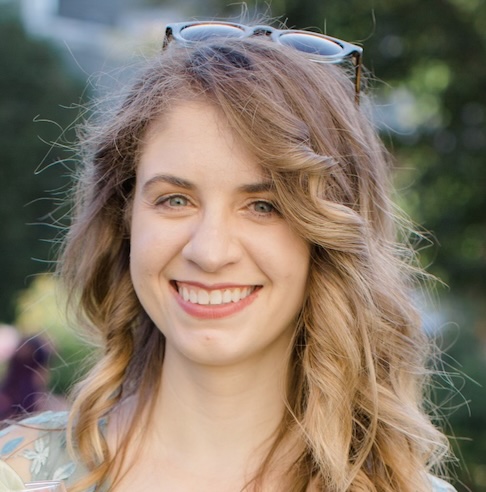 Marissa Gallerani is a queer and disabled writer and teacher living in Providence, Rhode Island. She received her MFA from The Newport MFA at Salve Regina, and has taught at multiple institutions of higher education including the New England Institute of Technology, Salve Regina University, and Write or Die. She has been published in The Harvard Review Online, the public’s radio, and The Financial Diet, among others. Marissa’s Substack, The Chaotic Reader, details her wide-ranging reading adventures. A life-long SFF fan, Marissa is currently at work on a science fantasy novel.
Thank you for reviewing this anthology. It’s a truly special collection of writing.