
Reviewed by Vicki Mayk

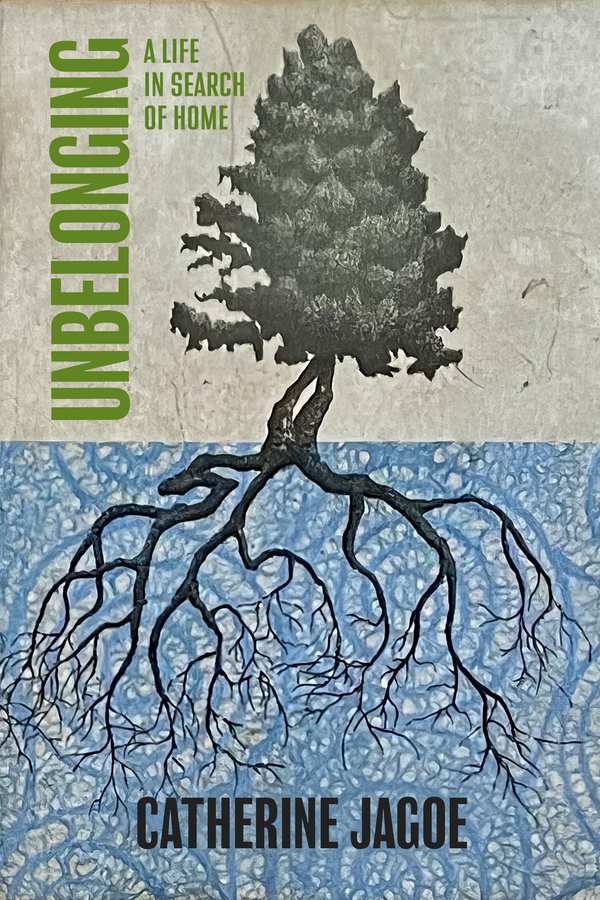 I never expected to live in Scranton, Pennsylvania—a location I arrived at by default because of a job I took after a corporate downsizing in 2009. Although I know what brought me here 17 years ago, I frequently find myself asking, “How did I end up here?” Maybe that’s why I was eager to read Catherine Jagoe’s memoir in essays, Unbelonging : A Life In Search of Home (University of Wisconsin Press; Aug. 2026). The book explores Jagoe’s long struggle of feeling “perpetually in between and never quite home.”
A British native who spent her early years in Nigeria, Jagoe came to the United States as a research fellow at Cambridge and stayed after marrying her American husband. They settled in Madison, Wisconsin, but in her work as a translator, she also spends many months in Spain. The book’s essays explore how she is and is not at home in those places.
The question of ‘what is home’ has never been an easy one to answer, Jagoe states in the book’s opening essay, “The Home Goal: Variations On A Theme.” She describes attending a meditation workshop, where she’s asked what home means to her. “How to explain the grief and the longing caused in me as an immigrant several times over?” she writes. “How to explain that the very reason I was there hinged on my inability to feel at home in the world?” Although she flees the workshop to avoid answering the question, Jagoe explores the answer brilliantly in the collection’s 17 essays. A lesser writer might easily slip into clichés around the topic, but Jagoe writes with originality and lyricism of her childhood in England, sojourns in Spain, and time spent in the United States.
She leverages many elements as entry points to tell her story. For example, using the recipe for her mother’s legendary Irish stew in the essay “Homecoming Stew,” she explores memories of returning home to Britain and her complicated relationship with her mother. In “Querencia,” a Google Earth image that may include a photo of her in front of the home where she lived in Spain gives her an opportunity to write about a longing to return to past times. “We can return to the places we love but not to the people we have been,” she concludes.
As writers, we’re taught that scent is the sense most powerfully linked to memory and Jagoe masterfully employs it in her essay “Brief Autobiography In Odors.” Home has a smell, she says, writing about her “childhood household’s olfactory DNA.” She describes an amalgam of pencils and modeling glue, her mother’s cooking and her mother’s Chanel No. 5, disinfectant, shoe polish, and more. She pushes the exploration further when she goes on to write about “the smell of countries:” the orange cleaning product used in England’s Manchester Airport, the scents of fish, mimosa, and jasmine in Spain, and “the smell of Wisconsin: apples in a barn.”
Jagoe skillfully weaves the book’s themes of home and belonging into essays that, at first glance, do not appear to follow that throughline. By the time we are done reading, we see how each reflects the book’s themes. One of my favorites is “Sessile,” about a project undertaken during the COVID-19 pandemic, when she spent hours studying a tree in her community. The word “sessile” means standing still. “During that time, my lifelong habit of wanting to be elsewhere laid itself quietly and unobtrusively to rest,” she writes. Forced to stay in Wisconsin, she spends hours observing a sycamore tree—a living thing that, like her pandemic self, stays in one place. As she learns about the species, she realizes it also is found in other locations she calls home, where it’s sometimes known by different names. “Uncovering these interwoven names and species felt emblematic, a metaphor for my life of entwined countries and languages,” she writes.
In the book’s closing essay, “Finding the Springs,” Jagoe explores a period when she struggled with depression triggered by returning to the U.S. after a “golden year” in Spain. She asks once again: “Where did I belong? Where was home?” Her therapist prescribes an unusual treatment: She must find the nine springs located in Madison, her home in the States. Her search to find elusive water springing from the ground forces her to interact more intimately with a community where she does not feel at home. She joins a group of birders—since birds gravitate to springs—and forges new relationships. She ventures into parts of the town previously unknown.
These connections help her to resolve significant questions about home and belonging. “Birding helped me reframe the question I’d been struggling with throughout my life about where I belong,” she writes. “Birds made me realize, deep down, that ‘settling’ in one place wasn’t the only pattern for a life, or even the most natural one.” She begins to “feel at peace about my own travels and more rooted in this terrain in the Yahara River watershed where I’ve happened to wash up.” This final essay offers a sense of closure that makes reading this collection a highly satisfying and affirming experience for a reader.
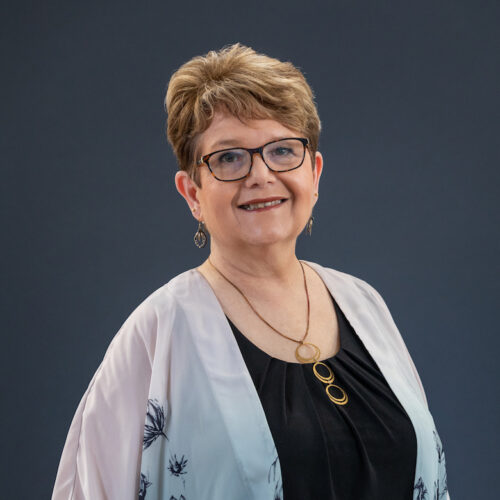
Vicki Mayk
ReviewerVicki Mayk is a memoirist, nonfiction writer and magazine editor who has enjoyed a 40-year career in journalism and public relations. Her nonfiction book, Growing Up On the Gridiron: Football, Friendship, and the Tragic Life of Owen Thomas (Beacon Press) was published in September 2020. Her creative nonfiction has been published in Hippocampus Magazine, Literary Mama, The Manifest-Station and in the anthology Air, published by Books by Hippocampus. She’s been the editor of three university magazines, most recently at Wilkes University in Wilkes-Barre, Pa., and now freelances and teaches adult writing workshops. Vicki previously served as reviews editor at Hippocampus Magazine. Connect with her at vickimayk.com.