

As a scientist who teaches evolutionary medicine, I spend much of my time thinking about why bodies fail. I did not expect mine to fail so suddenly.
“Better embarrassed than dead,” I said to the mirror. I was dripping more from sweat than the shower, my head was crippled with pain, and the ache in my chest was unable to mask my heart’s palpitations. I dressed, descended the stairs, and said words my wife, Caroline, never expected to hear: “I need you to take me to the emergency room.”
This Saturday morning episode was not my first. The first struck Wednesday night and was followed by episodes Thursday night and Friday afternoon. I had rationalized the others away—even leading two hikes on Thursday—but on Saturday the pain left me unable to play with my children. That’s when I knew I couldn’t ignore it.
We drove to Winchester Hospital with the (correct) belief that their emergency room would be fairly empty. I was dropped off and, afterward, Caroline attempted to run through our normal Saturday morning routine with the boys. Once in the ER, I was seen immediately. Blood and details were collected, my vitals were determined, and an EKG was taken.
My episode, slightly muted, continued while the doctors reviewed the data. The data were seemingly unambiguous: my troponin levels were elevated. As troponin is released by deceased heart muscle or heart muscle in great distress, the diagnosis was simple.
My doctor’s words were clear: “You’ve had a heart attack.”
This was in my pedagogical wheelhouse. I know what elevated troponin means and I know what chest pain can signal. But that knowledge did not make the diagnosis easier to hear. I didn’t like being accused of having a heart attack, and I found it unsettling that allowing a nitroglycerine pill to dissolve under my tongue helped end my episode.
The nurses detected my distress, but their well-wishes as I was wheeled out on a stretcher did not change my mood. I found it embarrassing to be taken by ambulance to the cardiac intensive care unit at Lahey Hospital. A heart attack felt less like a diagnosis than a verdict. I felt indicted before I even felt afraid.
The EMT in the back of the ambulance offered the kindest words: “Man, you don’t really pass the eyeball test. You don’t look sick to me.” That sentiment was not shared at Lahey. I was wheeled in, given a new IV, bled, hooked up to monitors, and prescribed drugs I never wanted. I felt that this was somehow a mistake, which may explain my first words to the cardiac specialist:
“What is the plan for taking me off these drugs?”
His words were not comforting. “Look, you had a heart attack and you have a family history of heart attacks. You’ll be taking medication for a very long time.”
I suppose I should have been pleased with his answer—it implied that I would live a long time—but I’ve never liked the idea of perpetual medication. And I didn’t like that my father having died from his fourth major heart attack was used against me. Environmental influences played a major role in his heart attacks: he smoked, drank, and had the stress of his wife and six children.
But I also knew my family was secretive. I couldn’t trust that the family history I’d been given was complete. If my mother hadn’t told me about my father’s drinking, I’m not sure I would have thought of him as a drinker at all.
Illness Grammar
In my childhood home, illness had a grammar. My mother felt that staying home from school was suspect; fresh air could heal anything. And the most curative air was the air you received on your way to school. She demanded it. I remember stopping to vomit in a neighbor’s yard and deciding it was safest to continue on to elementary school.
My older siblings went to my father instead. He would tuck them in on the couch and declare them officially ill. With my father gone, illness brought nothing but distance—and the suspicion that if you were sick, you had earned it. In our house, sickness was not something that happened to you. It was something you did. That was the grammar I carried with me into the hospital—and here, it offered nothing but weight.
I didn’t like being separated from my boys. I asked if we could speed the process; I really wanted to be sent home Sunday. There would be no accelerated process for me. I needed to wait forty-eight hours as heparin, a blood thinner, dripped into my veins. My echocardiogram and coronary angiography were scheduled for Monday.
I sent a note to my graduate students Saturday night to inform them that I would not be in on Monday. The note included the lines: “I won’t be in Monday, and I might be out Tuesday too. It all depends on what the doctors say. I dropped by to get something looked at and they want to run tests during the week. I feel fine, so don’t worry.”
My confidence was shaken Sunday morning. My troponin levels had increased before leveling off, and even with the heparin, Lipitor, blood pressure medication, and heart medication, I had another episode. And it was major.
The pain in my head and chest was excruciating, my palpitations made it feel as if my heart was bouncing off my rib cage, and my sweat soaked through my hospital gown, my sheets, and my pillow. I shivered helplessly as they replaced them all.
This was the first time I truly considered the possibility that my three-year-old and eight-month-old sons would never know me. This realization led me to experience what my doctor called “a storm”: I sobbed uncontrollably. Anxiety medication, Tylenol, and nitroglycerin calmed my episode, but my storm held strongly just beneath the surface.
The rest of Sunday was relatively calm. As she had on Saturday, Caroline was able to secure babysitters and visit me. We discussed the possibilities, who I should inform, and how I should share the information. Sunday was also the first time I felt it was possible that I’d had had a heart attack. I felt guilty. Perhaps I ate or drank too much or gave too much respect to the stress of my job. Regardless, if I had had a heart attack, I was certain it was my fault.
And it was my fault because it was my father’s fault.
Family History
My father killed himself. Not literally, with a gun or noose, but with his lifestyle. That’s how my family spoke of it—how he brought on his fatal heart attack with his habits. He chose to drink. He chose to smoke. The cognitive leap to “he chose his heart attack” was short. My mother wouldn’t let us forget his choices.
I learned that lesson beginning with his death, when I was 10, and the lesson stayed with me. It’s barely hidden in the language of my family. Although never stated outright, the implication was clear: he widowed his wife and left his children fatherless. He victimized his family with his behavior.
And now I feared that I was following in his footsteps. I was victimizing my wife and children. I was a failure.
Ironically, as I was beginning to accept the guilt and shame of my failure, my doctors were beginning to question their diagnosis. My episodes didn’t fit within a normal framework, and neither did my response to the medications. It was during the second of my thrice-daily bleedings that the phlebotomist collected extra vials to determine whether I had an infection. Infection or not, I met Monday with another soul-destroying episode. I thought I might die.
I didn’t mention this explicitly to Caroline, but I think she knew. We spent a fair amount of time on Monday discussing the possibilities. We decided on three: I had a minor heart attack, I had a major heart attack, or I had an infection. What we left unspoken was the lost hope for a fourth possibility—that I was actually okay. That seemed impossible.
If it was a minor heart attack we would tell no one—not my family, my friends, or my coworkers. When people perceive you as broken they treat you differently, and there is no one I know—other than Caroline—who has earned that right.
If it was a major heart attack, we would have to tell everyone, but I’d frame it within other truths. I have been hard on my body. I blew out my shoulder close-grip benching three hundred pounds but still made the lift, and I tore my quadriceps in a softball game but refused to stop playing. It was only fitting that I had a heart attack the night before I collected honeybees and led two forced marches through the woods. Somehow documenting how I destroyed my own body through effort was less emasculating than admitting my body might be killing me over bad choices.
We both decided, at the time, that the worst possibility was an infection. We can correct plumbing malfunctions, but when a pathogen is involved, we need pharmaceuticals. And they are unreliable; you cannot count on them unless you have a very common—and lucrative—disease.
But we did agree that an infection would, at the very least, give me a “fun” story to tell.
Competing Diagnoses
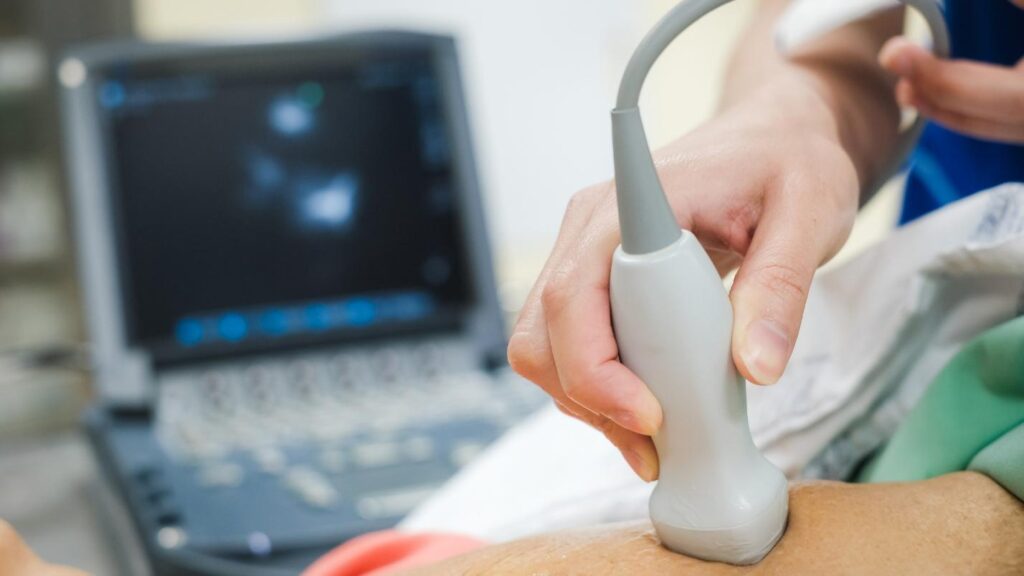
All stories or explanations would have to be put on hold, however, because it was time for an echocardiogram. The technician who performed the procedure was at her mannequin best: she was only slightly more disinterested in giving me an opinion than she was in performing the test. But it might have been the best test that I have ever had. With a clinically uncaring manner, she left me disheveled. Caroline moved quickly to correct the technician’s carelessness and, in doing so, noticed what had been missed by so many health-care professionals who had complete access to my body: a Lyme disease bullseye rash.
We quickly informed my nurse, and before she had a chance to return with antibiotics, Caroline—with the help of the CDC website—had already diagnosed my illness: Lyme carditis. As it turned out, she and I preferred the infection to structural damage. My cardiac team, however, disagreed.
I was wheeled down to the cardiac catheterization lab for a coronary angiography. While my arm and my groin were being shaved, I tried to convince the doctor that I no longer needed the procedure. And although the nurses found my rash sufficiently interesting to take multiple photographs, the doctor was less impressed. “Mr. ******, you have Lyme disease and you’ve had a heart attack.”
I sighed. When you are a hammer, the world looks like nails: a cardiac specialist will always see heart disease. I allowed myself to be taken in for the procedure. While you may believe that you are a collaborator in your health care, when you’re in the hospital, collaboration is compliance. I feared the violation of having a tube run into my body with the goal of releasing dye into my heart.
The process itself was interesting. It started with the sting of lidocaine, followed by the slicing of skin and the insertion of a funnel into a vein. Drugs that burned were then released to relax the veins. A tube was inserted and forced toward the center of my being. Once it found my core, dye was injected and its flow around my heart was monitored. Once complete, the doctor spoke. “Well, you didn’t have a heart attack.” I asked him to go to the waiting room to tell Caroline.
I never want to be in that waiting room. Family and loved ones wait there hoping for the least bad news possible. The heaviness of the moment—and of the room—struck Caroline as the doctor told her the news. She burst into tears. The honesty of that moment must have been humbling. She could drop the façade: no mother with two young children is prepared for a forty-six-year-old husband with a damaged heart.
I was brought back to my room and given IV antibiotics. An infectious disease specialist was added to my team, but the cardiac specialists had not given up hope of finding a heart attack. Perhaps my attack wasn’t on the surface of my heart but was rather deep within.
At eleven that night, I was placed on a tray and slid into a tube narrow enough that both my shoulders pressed against the edge. The cardiac MRI took over an hour to complete.
Once back in my room, I slept, but uncomfortably. Monday night was the first in six that I did not have a full episode. My chest pain, heart palpitations, and headaches were gone, but my drenching sweats remained. My clothing and linens were changed at three in the morning.
Tuesday was mixed. I was given the fantastic news that all tests indicated that I did not have a heart attack, and that the troponin had been released because my heart was inflamed. I was also told about the impact Lyme disease can have on an individual and the difficulties sometimes encountered fighting it. And my body was fighting it. After the euphoria of my heart news passed, I felt the full onslaught of the pathogen.
Only about ten percent of Lyme disease impacts the heart, and only a fraction of those cases infect both the electrical and muscular systems. That’s what happened to me. In my experience, the pathogen tries to kill you two ways: it accelerates the heart or it stops it. Of the two, I found stopping it more interesting—but only because I simply skipped beats. Any worse and I might have needed a pacemaker.
An End to Blame
During my out-processing, my cardiologist—the chief of cardiology—shared something that changed my life. When Caroline asked, “How do you know who’s going to have a heart attack?” he replied, “Even with everything we know about risk factors, I can’t predict who’ll have a heart attack. I only know that if someone does, I can fix them.”
The relief I was feeling shifted into something heavier. If the chief of cardiology—a man who had spent his entire career studying hearts—couldn’t predict who would fail, then my father never had a chance. The blame, accusation, mythology about his choices—it was just a story we told ourselves so randomness didn’t feel so unbearable.
He didn’t choose to leave us. He was just unlucky. He was a man who hit a wall he was never going to clear—shaped by a lifetime of hard work, hard drinking, and hard stress, in a body that was never given a fair chance. The damage of his choices and his circumstances compounded in ways that no doctor in that era could have predicted or corrected. He didn’t commit a crime. He ran out of luck. And for years, I had held him accountable—and had braced myself for the same verdict.
The exoneration felt strange. Grief is simpler when someone is guilty. Blame helps order the chaos of grief.
***
Epilogue
My illness occurred twelve years ago. I received four days of IV antibiotics and was prescribed four weeks of oral antibiotics. I recovered quickly and have not had any Lyme disease symptoms since.
I got the tick bite while expanding my backyard—building a fence to protect my children from the very thing that nearly killed me. The irony wasn’t lost on me then, and it still stings now: you cannot fence out randomness. You can only teach your children that when it finds them, it isn’t their fault. My children know this.
You cannot blame the sick for being ill, and illness does not make someone broken. The grammar of blame is inherited. I am trying, with whatever words I have, to break the chain.
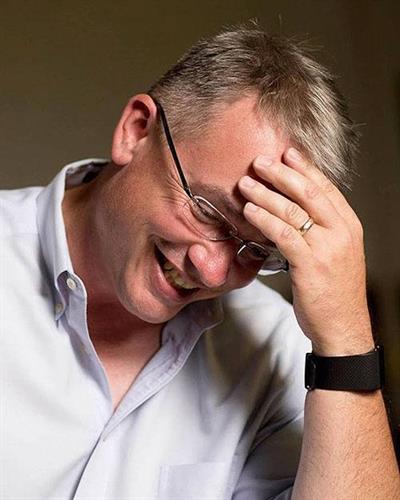 Philip T Starks is a behavioral ecologist and associate professor of biology at Tufts University, where he studies social insects. His essays have appeared in Scientific American, JAMA, Psyche and elsewhere; he has also published more than 75 peer-reviewed papers on social animals. A U.S. Army veteran of the Persian Gulf War, he lives in Massachusetts with his wife, Caroline, and their sons.