Interview by Leslie Lindsay

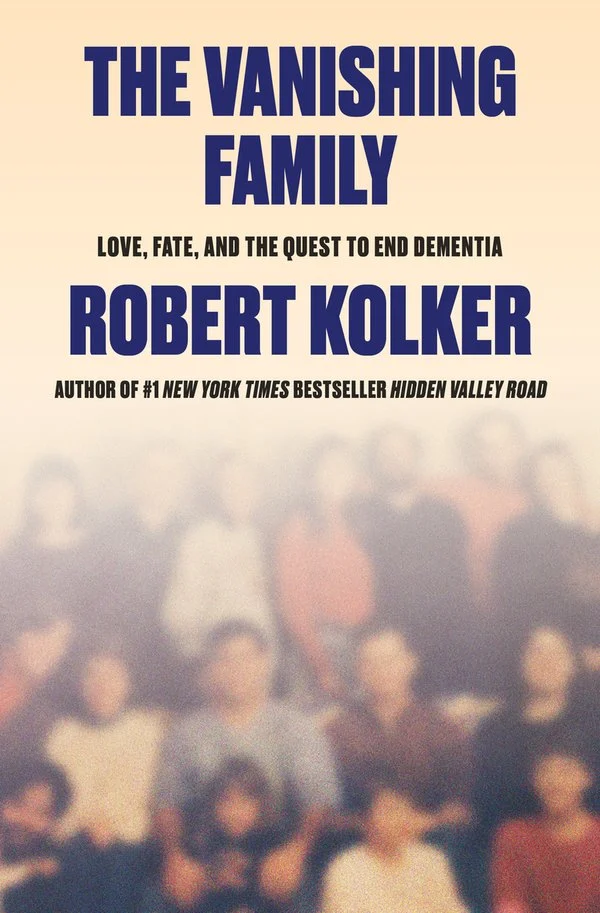 It’s the late 1960s in small town Pleasant Hills, Pennsylvania, a swath of farmland on the eastern outskirts of Pittsburgh, when Ollie and Jean and their brood of eight — soon to be nine — children move into a five-bedroom Colonial.
Ollie is an engineer and Jean has a degree from St. Mary’s, the sister school of Notre Dame, but she’s plenty busy raising children, attending bridge club, hosting parties, and keeping everything running smoothly. If it sounds too good to be true, you’d be right.
Barb, the youngest child by about ten years, notices something strange after her brothers and sisters leave for college: her still-young mother seemingly falls under a spell, changing into someone she doesn’t recognize: withdrawn, neglectful, uncaring. Could it be something like midlife finally catching up with her? An almost-empty nest? Or something else? The siblings learn that they are the carriers of a genetic mutation that causes dementia to set in as early as their 40s.
Award-winning journalist Robert Kolker joins us for a conversation about the search for a cure for dementia and Alzheimer’s disease in his deeply moving new book, The Vanishing Family: Love, Fate, and the Quest to End Dementia (Doubleday; Sept. 2026). Their story unfolds like a heartbreaking thriller, each turn growing darker and more pervasive than any of the siblings could have imagined.
This multifaceted portrait of an American family is a brilliant blending of journalism, medical mystery, and a tenacious tale of family, hope, and resilience. Please join me in conversation with Robert Kolker.

Leslie Lindsay: Bob, it’s lovely to chat with you again. I think we’ve discussed all three of your books, from The Lost Girls to Hidden Valley Road, and now The Vanishing Family. It just dawned on me that your work — at least your titles — have to do with something hidden or unseen. Can you talk about that a little, please? Is this a theme you’ve recognized in your own work? And can you tell me what the jumping off point was for you on this one?
Robert Kolker: I’m so glad to be talking with you again, Leslie. I do think that as a society, we often wall ourselves off from difficult subjects and uncomfortable feelings. Stories are one thing we all rely on to help us process and reckon with the fears we all keep hidden, just to get through daily life. In my narrative nonfiction, I think I’m drawn to stories of everyday people facing some version of the fears we all share. I think we all can learn from these people.
This family actually found me. Four years ago, I got the first email from one sibling, explaining their predicament. The choices they all face — whether to get tested, have children, tell their friends — was breathtaking. But then came bigger questions: What about any of us is real and lasting, if one genetic mutation can completely change someone’s personality? And if this mutation can be fixed by gene-editing, why hasn’t that happened yet?
L.L.: The story really begins in 1949, but even before then. Ollie and Jean meet at college and fall in love. They marry. They relocate to St. Louis, Missouri, then a brief stop in Ohio, before settling in Pleasant Hills. Jean’s family is from Wisconsin. There are sojourns to the Mayo Clinic in Rochester, Minnesota, and a stop or two in Denver. What I am getting at is there are no true origins to a family, or even a story, and especially when they involve genetics and genealogy.
R.K.: Our families are all so portable now. In my family, when we have zooms, they’re international. Genetics and genealogy may be what is left to bind many of us. That gives everyone a choice they might not have had a few generations ago. We can decide what family ties are important to us in a way we never have before. This family’s story, meanwhile, is about people who recommit to one another under the most trying circumstances possible. I found it inspiring.
L.L: Let’s return to the beginning of this story — as you tell it — in The Vanishing Family. Barb is the last child at home after her eight siblings have left for college and careers. Her mother, once very ‘on top of things,’ slim, and capable, has fallen into a state of disarray. She’s watching a lot of television, seems withdrawn and depressed. She’s uncaring. She’s only in her forties, so what could possibly be happening? Barb feels compelled to start an investigation…but it takes time for the other siblings to agree. Can you walk us through some of those early moments with Barb and her mother?
R.K.: Barb spent her middle school and much of her high school years alone with her mother, while everyone else in the family, including her father, kept their distance. It was a traumatic period for her. And years later, when she learns the truth about her mother’s illness, she realizes that she might very well experience the same thing — and her own children might grow up watching her the same way she watched her mother. It’s like three different nightmares at once.
L.L.: So many of your chapters are linked because we’re spending time with a very large family — nine children plus two parents — and then, the adult children marry and have children of their own. Thankfully you offer these lovely family trees and chapters bolded with family lineage, which family member and their birth order, we are following. It must have been very cumbersome to keep the details straight. Can you give us a glimpse into your process?
R.K.: I love family stories because they give you a chance to really get to know people all through their lives. By the time the next generation starts to experience something, you really feel it in an intimate way because you know their parents and a lot of the context for everything that happens to them. It takes a little work to guide readers through so many names at first, but I love that challenge because the payoff, to me, is this greater level of intimacy.
L.L.: Nearly all of these siblings are high-functioning, over-achieving type people. They are musicians, mathematicians, engineers, scientists, well-liked…and then one by one, they change, their former selves vanishing. Then, the unexplainable…poor hygiene, neglect, lack of bonding with their children, job loss, hoarding, wandering, living in filth, forgetting to pay bills. There are multiple divorces. They seem to lack all sense of decorum, and emotions like embarrassment or remorse diminish. It would be easy to say it was something else. What were some of the ‘something elses’ that were explored?
R.K.: Some people suspected alcoholism, others depression, still others menopause or a mid-life crisis. Most often, it seemed to many people that they were going through some sort of nervous breakdown in the wake of a failed marriage. Above all, their loved ones had faith in these people that they would self-correct at some point. After all, they were so smart and capable and accomplished; why shouldn’t they get better all by themselves?
L.L.: Can you give us a quick definition of FTD, the diagnosis the family eventually received?
R.K.: FTD [frontotemporal dementia] strikes as early as one’s forties. Unlike Alzheimer’s and other forms of dementia, which affect memory and cognition, FTD attacks impulse control and social behavior. They are both compulsive and apathetic. They can’t sustain deep relationships. Their personalities seem to completely transform — or dilute into nothing. Neuroscientists are fascinated by FTD because of this. It’s where the study of the physical brain crosses over into fields like psychiatry.
L.L.: What key takeaways should readers be aware of when it comes to these mutations, assessing whether they (or a family member) have inherited FTD? Is there a ‘simple’ way to identify FTD versus ‘run-of-the-mill’ late-in-life dementia?
R.K.: Diagnosing FTD can be tricky because so many other disorders, like schizophrenia and depression, need to be ruled out. The symptoms, again, aren’t forgetfulness at first. The initial warning signs are subtle. People start missing social cues, and stop empathizing with others. They become more interested in their moment-to-moment impulses and less in what others want — but in an innocent, almost childlike way. It’s not narcissism; it’s more of a failure to connect with others.
L.L.: So much of The Vanishing Family is about a search for a cure, but would you say it’s also about longing? Hope? Love? The power of family?
R.K.: I think it’s about what people who love one another do for one another when tragedy strikes. It’s also about what there might be in any of us that is real and lasting. And it’s about the world we are all about to enter, where we all will have access to tests that will predict our medical futures. How does it change a person to know more about their destiny?
L.L.: They say art should transform the artist, while also inspiring others. It should be specific, yet universal. Do you feel you were changed by writing The Vanishing Family?
R.K.: I certainly was! I am more mindful of making my time count. I’m less inclined to perseverate about little things like where to park the car or how to load the dishwasher. I’d rather spend my time on things that matter. (Though of course I still can worry with the best of them!)
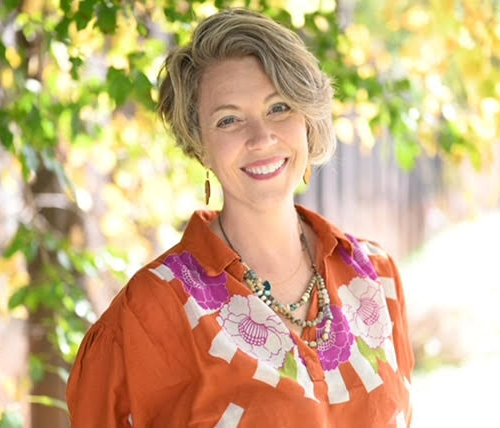
Leslie Lindsay
Staff InterviewerLeslie A. Lindsay is the author of Speaking of Apraxia: A Parents’ Guide to Childhood Apraxia of Speech (Woodbine House, 2021 and PRH Audio, 2022). She has contributed to the anthology, BECOMING REAL: Women Reclaim the Power of the Imagined Through Speculative Nonfiction (Pact Press/Regal House, October 2024).
Leslie’s essays, reviews, poetry, photography, and interviews have appeared in The Millions, DIAGRAM, The Rumpus, LitHub, and On the Seawall, among others. She holds a BSN from the University of Missouri-Columbia, is a former Mayo Clinic child/adolescent psychiatric R.N., an alumna of Kenyon Writer’s Workshop. Her work has been supported by Ragdale and Vermont Studio Center and nominated for Best American Short Fiction.