

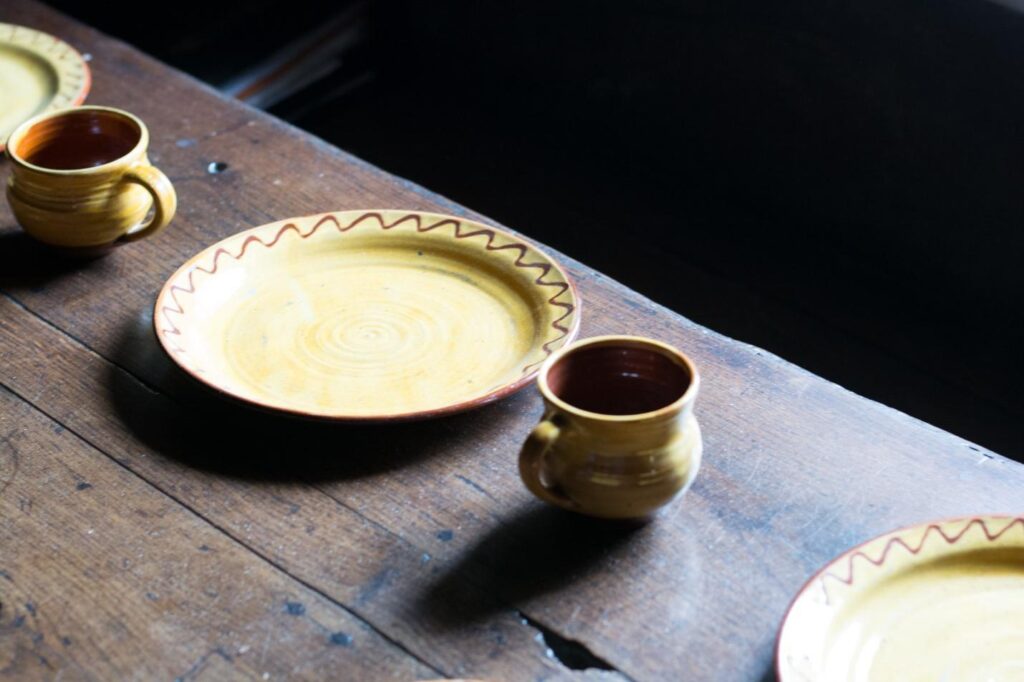
You are a young woman when you attend a dinner party at the farm. Late, lush summer. Dark leaves drooping out of tall maples. A screen porch. A long wood table with a cotton tablecloth. Inside: pottery, paintings of nude women in frames. Rubber boots scabbed with dried mud by the door. Folks and conversation swinging in and out of the kitchen.
The woman of the farm has hair softened by the long sun. She stands solid on Earth, cheeks creased from decades of easy smiles. She has thrown this party to celebrate ripe things. To bask in the fullness of grilled sweet corn, green beans, tomatoes that squirt seeds when teeth pierce their flesh.
You are in love with her the way you were in love with those girls in grade school you wanted to call your friends. That same feeling in your stomach-pit that could make you do anything to prove your worth: climb the tallest tree, lick a toad, scream out a cuss word. You are eager. It makes your throat catch.
You have brought the man you expect to marry to the dinner party at the farm. He does not take notice of the mud-crusted boots or paintings. He leads you toward a cluster of other men and proceeds to display his knowledge of inflation rates. There was a time when you drank his words like hot chocolate. Then, you wondered why you had jitters, why your stomach had flooded with bile. You form your mouth into the shape of a smile and nod your head up and down. You gaze through an open window at rust-colored chickens eating ticks out of the grass.
She lives by herself on the farm. The man you expect to marry finds her existence quaint, odd. “It must be lonely.” His voice dipped in pity.
Crescent moons of armpit sweat have leaked onto your shirt. Crickets are beginning to shriek because it is the golden hour. Someone rings the dinner bell.
Across history, a woman has existed. Words have been created to describe this type of woman, words that equate to a warning. She could infect others with her devilish affliction: being untethered to a man. She needed to be kept away from the impressionable. Nudged to the edge of the village, where her unpleasant largeness would not crowd, where her malady would not spread. At the edge, this woman learned things. At the edge, she became the midwife. The healer. The herbalist. The witch.
Spills of grease on the cotton tablecloth. Ravaged corn cobs like toothless mouths. A raspberry pie exits the oven with freckles of blackened sugar on top.
The man you expect to marry has become winesullen in the corner of your eye. You think about pie. You don’t ask about lingering long enough to taste it. You gather your keys, apologize for making him stay too late at the party. Later, you will cry silently on the edge of the bed while he sleeps and you will apologize into the thick night air for crying.
Some say the word crone was born from carogne, meaning carrion. Dead flesh. Some say the crone — like other female monsters — is present to warn of the nature of women when left alone to their own devices. Their tendency toward dark and deadly fantasies.
Eventually, you will fall asleep and wake up in your future, where the man you expect to marry will come home to tell you he is leaving you for another woman. (In response, you will apologize.) You will stand in the kitchen and consider the engagement ring that was, many months ago, sized to the dimensions of your finger. You will run your thumb along the inlaid stone. Milky, murky blue, like an eye with cataracts. And you will laugh in a small and high-pitched way and wonder if your face is really falling off onto the floor or if it just feels that way. And you will drop the ring into your pocket to make space in your hands for the moving boxes.
The crone at the edge was feared. But she was necessary for the village to birth slimy new humans. To heal from wounds and viruses. Was she revered in secret for her glowing magic? Envied, even? For her deliverance?
You will drive your car full of boxes out of the city until all the buildings have been replaced with trees. The road will be bumpy. The bumps will cause parts of your brain to shake loose and rattle around in your skull. You will stop on the side of the road and you will be alone. The brain bits will rattle out from one of your ears and fall to the ground. You will consider them there, strewn like small dark stones among the ditch flowers. And some of the empty sagging bits of you will be filled, suddenly, with yourself. With such pure self-ness, you will want to scream.
Some believe crone comes from corona. The halo of light around a body. The outermost layer of the Sun’s atmosphere. Plasma, ionized gas, blinding heat. A supercharged ring of fire.
You will keep the murky-stone ring in a small box, in the bottom of a dark drawer. One day, some summers later, you will take it out. You will watch its turbid eye change color in different slants of light.
Will you put the ring in your pocket? Will you grab your keys and drive across a bridge to an island in the center of a river that runs through your city? You once spread a blanket here under a crabapple tree and ate so many sour fruits that your stomach clenched in pain. Will you place one to your lips, knowing its truth? That its chalky tannins will curdle your insides?
Will you think of the way the woman of the farm took your hands in hers, after her dinner party, as you bid her goodnight? She’d smiled a secret kinship at you, while the man you expected to marry waited by the car. Will you remember the way her weathered fingers were unadorned and cool to the touch?
Will you stand on the embankment and drop your glinting ring into the brown river water oozing toward the other end of the continent?
Does a crone look into the spaces between worlds and see what is coming? What underlies?
Perhaps you will close your eyes and feel the warmth of ripe sun on your eyelids. Beneath your lids you will see the woman of the farm. Made of effervescent space. Wrapped in a halo of it. You will feel her pulling you into an embrace. She will invite you in, where other crones have gathered. They will laugh and touch hands and close their eyes when inhaling the scent of fresh raspberry pie. You will talk late into the evening over candles and crickets, and no one will think to say it is time to head home.
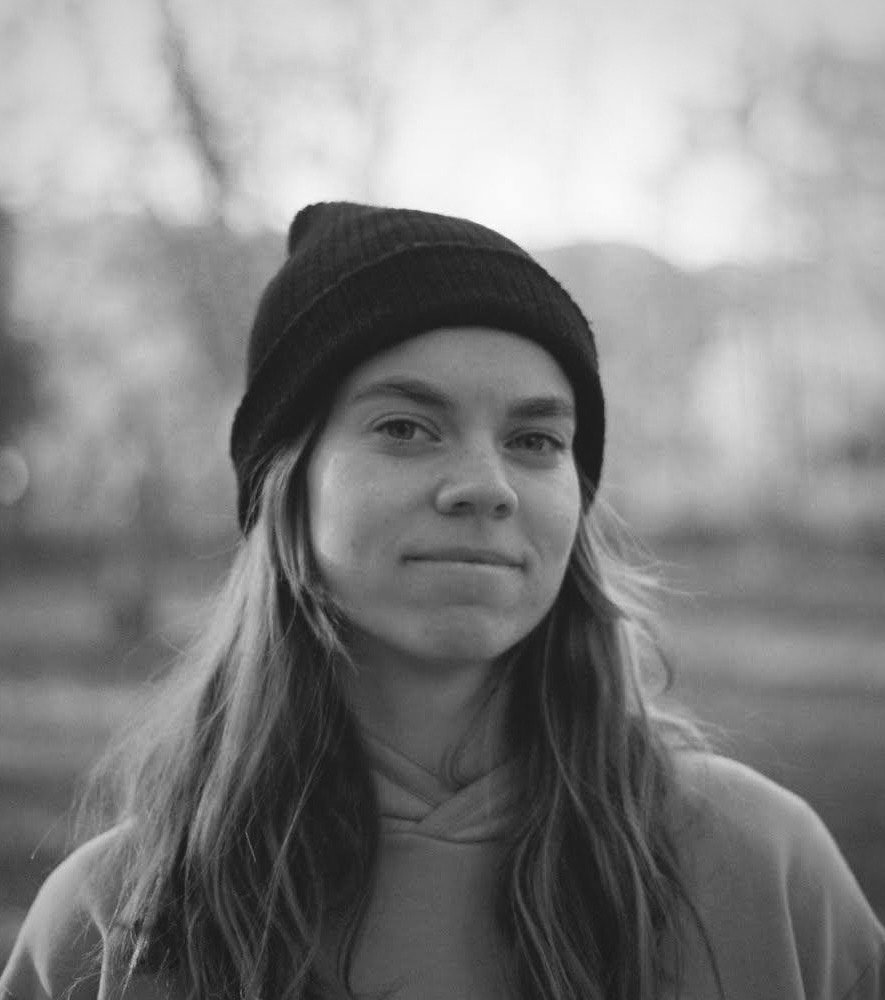 Sofie Wicklund (she/they) is an emerging writer and MFA student at Hamline University. She holds an MS in environmental studies from Antioch University New England, and her day job is focused on the intersection of communities and watersheds. Sofie lives with their partner in a very old house in St. Paul, Minnesota.
Image: “Farm house table” by Wayne Thume, CC BY-NC-ND 2.0 via Flickr Creative Commons