Reviewed by Lindsay Bennett

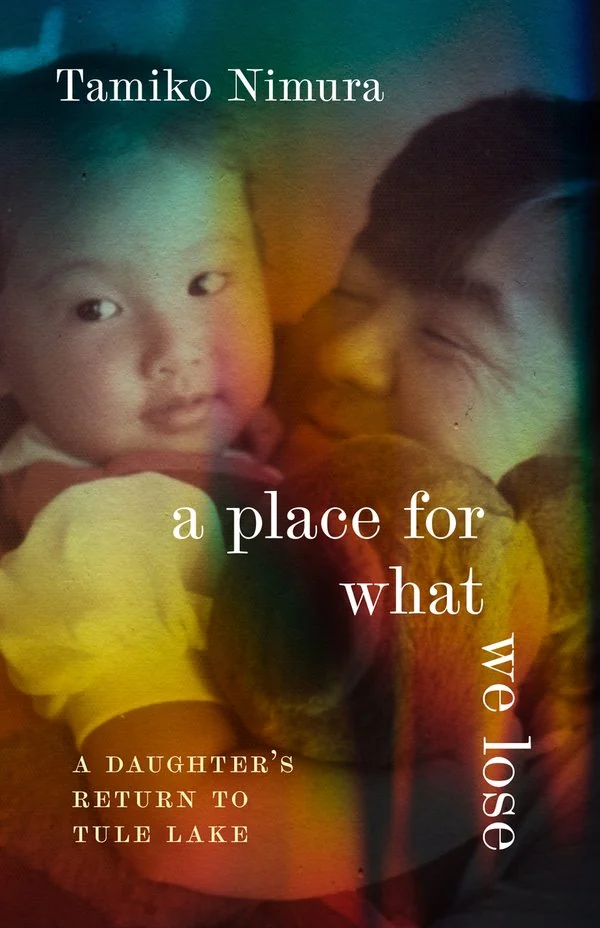 Tamiko Nimura’s A Place For What We Lose: A Daughter’s Return To Tule Lake (University of Washington Press; April 2026) is a meditation on family, grief, and the importance of passing down stories.
When her own life requires her to chart a new path, Nimura finds herself with extra time on her hands. She decides to reread her father’s unpublished memoir (she read it once, as a young girl). Having lost him when she was just ten, the author aches to reconnect with her beloved father. Her memories of him are precious, but far too few. Her questions, on the other hand, are numerous and, for reasons we learn as readers, complicated.
What We Lose is, thus, a memoir, layered. There is the manuscript of the author’s father, Taku Nimura (titled “Daruma”), portions of which are interwoven with the primary narrative. And then there is the author’s hopscotching from one core memory of her childhood to the next, during which she reconsiders her recollections, applying insights from her adult life along the way.
“Daruma” is an account of Taku Nimura’s incarceration at the infamous Tule Lake Japanese prison camp, beginning when he was ten years old. Like more than 100,000 other Japanese Americans, Taku Nimura was imprisoned, along with his family, under wartime executive order 9066. All told, Taku and his family spent four long years at Camp. When they returned to their previous home in the foothills of Northern California, nearly everything they had was gone. With hardly a trace of the life they had worked so hard to build before the war, the Nimura family began again, each shaped by the hardships they endured and injustices they suffered.
Rereading “Daruma,” Tamiko Nimura undertakes a deep examination into her family’s story. In doing so, she is struck by themes that continue to show up: silence, bitterness, resilience, homecoming, and hoarding among them. She interrogates what these themes mean, holding conversations with her aunts and uncles who help to fill in gaps in Nimura’s understanding, and revisiting old family photos, which she sees with fresh eyes.
What is, in many ways, a spiritual journey for Nimura, culminates with an actual journey — two actually. First, Kimura embarks on a trip to Tule Lake, joined by some of those who had been imprisoned there, along with various descendants and loved ones. And later, Kimura visits the cemetery where her father (and other family members) was laid to rest. For years, Kimura could not bring herself to visit her father’s grave. When she finally does, she finds strength is the family that surrounds her and support in the family she has made — her husband and their two young daughters.
Beyond the bounds of traditional memoir, What We Lose is also a work that wrestles with the craft of writing (Kimura’s background is that of a professor of writing), as well as book of history (the book is rich in detail regarding the American government’s amoral imprisonment of Japanese Americans during World War II), and one that meets the moment (Kimura reflects in horror at the way “it’s happening again,” in reference to the ongoing detention of immigrants and the mistreatment of people of color in the U.S.).
For this reader, the connections Nimura draws between her family’s story and the ongoing targeting of those marked as “other,” including the separation of families in the name of — for example — national security, make What We Lose feel particularly poignant. The book is a good read, but it is also an important read. I find myself feeling grateful for the time and emotional labor required to produce it.
Nimura’s title comes from something Freud once wrote to a friend who had lost a child: “We find a place for what we lose . . . shaped just like the loss.”
In the end, it is as Nimura predicted it would be in the beginning. She writes, “I decide to make a place for what I have lost. It will be shaped like an object my father and I have both loved. It will be shaped like a book.”
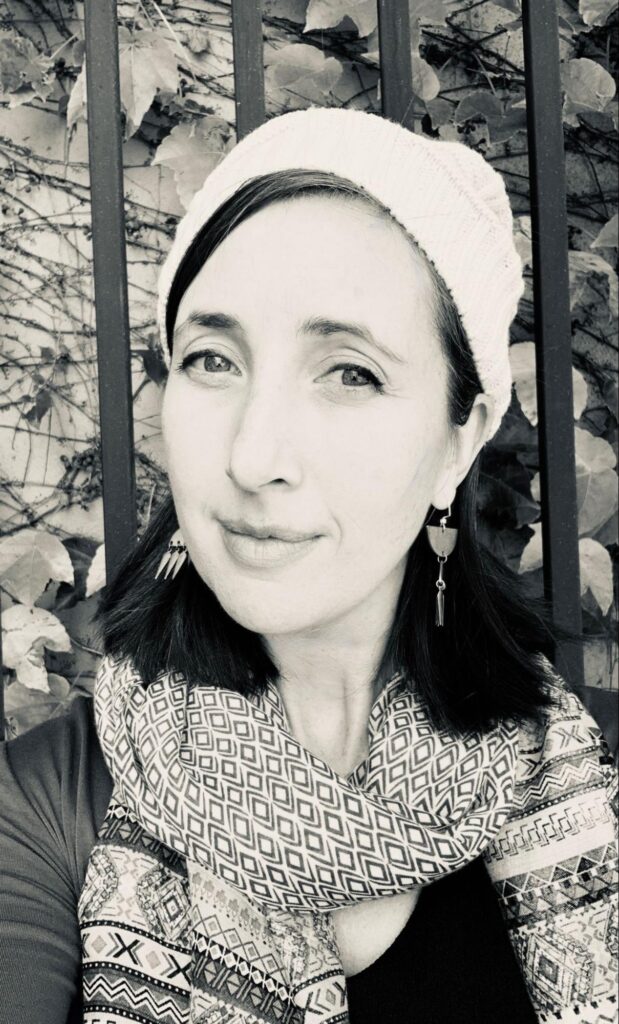 Lindsay has always been moved by people’s stories. For many years, in her capacity as a death penalty lawyer, Lindsay worked to tell her clients’ stories. Fueled by her love of great storytelling, she went back to school in her 40s, obtaining her master’s in creative writing and literature from Harvard Extension School, where she was awarded the Dean’s Prize for Outstanding Capstone Project. Lindsay’s work has been featured in Ms. Magazine, Herstry, and The Memoirist, among other publications. In all endeavors, Lindsay is guided by her belief in the transformative power of stories well told. She is working on her first book, a work of narrative nonfiction. Read more at www.lindsay-bennett.com.