Interviewed by Michèle Dawson Haber

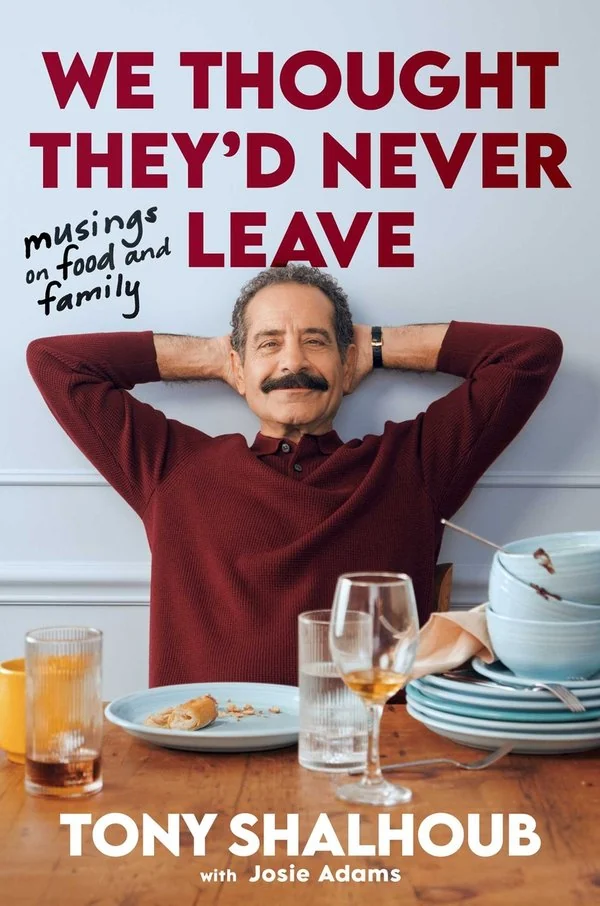 I’m a serial non-celebrity memoir reader. I choose to read about the lives and struggles of regular folks because I want to feel that resonance, that recognition of something familiar in someone else’s story. This thread of commonality adds to my understanding and acceptance of myself and my world. Can a celebrity memoir do the same thing? I didn’t think so, but Tony Shalhoub and Josie Adams have proven me wrong.
Written jointly as a father and daughter team, We Thought They’d Never Leave: Musings on Food and Family (Simon & Schuster; Oct. 2026), is a charming, engaging, and mouth-watering chronicle of the Shalhoub family and their annual summer reunion in Door County, Wisconsin. Although the book has a few references to Tony’s most famous roles, including Monk and The Marvelous Mrs. Maisel, they are not the focus. Instead, the book invites the reader to experience the history, tastes, and silly routines (of which the title is one) of his many Lebanese American family members who work hard not to take their devotion to each other for granted.
The narrative is touching and profound as well as funny and unconventional. In addition to the twenty favorite Shalhoub family recipes found at the end, I was treated to laugh-out-loud scenes of kitchen chaos, lists of pet peeves, and rules for boredom-busting games. The book comes across as a handbook of sorts; a handbook for those who want to hold their family together, no matter how much effort it may take.
One of ten children born to Lebanese immigrants, Tony and his siblings have prioritized their annual summer family gathering for five decades. As their families grew, so did the size and complexity of the reunion. And yet, it continues — now encompassing four generations. Josie Adams joined the Shalhoub clan after Tony married her adoptive mother, Brooke Adams, making him an instant adoptive father. Two years later, the couple adopted a second girl, Sophie.
I was excited to talk to Josie about her role as co-author of We Thought They’d Never Leave and about her own story and writing career. Our conversation was as illuminating as I’d hoped it would be. If your appetite is whetted, I invite you to enjoy our conversation below and, should you read the book, to pull up a chair at the Shalhoub family table.
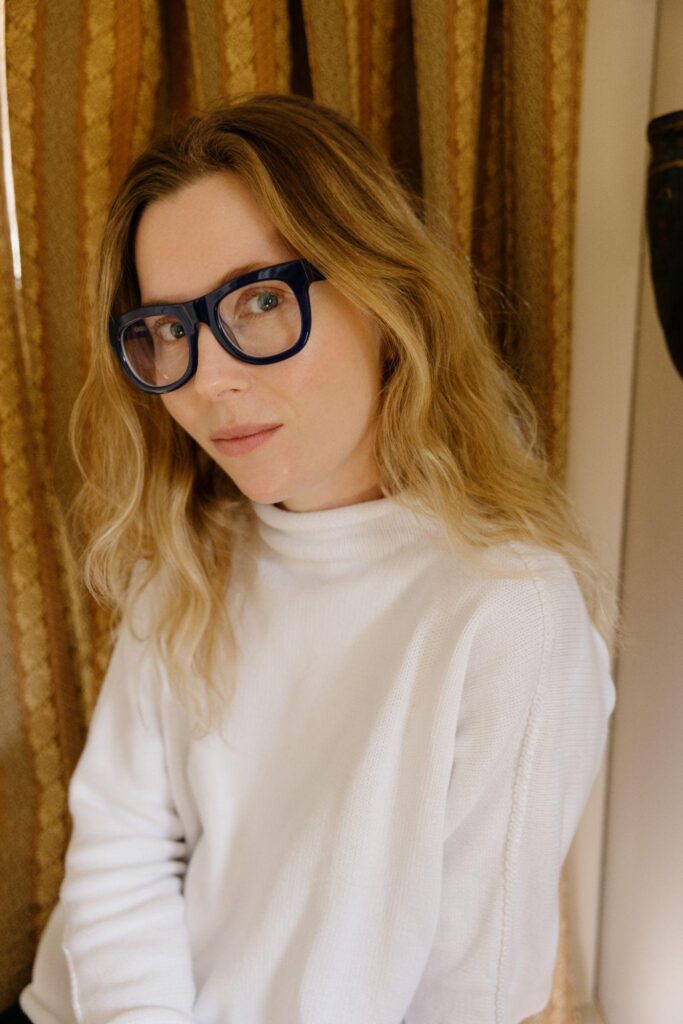
Michèle Dawson Haber: Congratulations, Josie on the publication of We Thought They’d Never Leave. It is utterly delightful! I smiled throughout – at the jokes, in recognition of the trivial human foibles we put up with in family, and the conversational tone. But more than this was the reward of encountering the many simple, everyday scenes described so profoundly. I can’t wait to unpack this book and find out who did what but first, can you tell me what the genesis of it was?
Josie Adams: Well, first, I’m so glad you called the tone conversational because I worked hard to capture my dad’s voice in the parts that I worked on. So that feels like a huge success. I’m very passionate about food, food writing, and cooking. I went to culinary school and worked at Bon Appétit and Martha Stewart Living for a couple of years. My love of food comes from my family, and I’ve always wanted to collect our recipes and do a family cookbook. I asked my dad if he would be interested in working on it with me, and he said yes. We put together a proposal and I brought it to my agent who was very excited about it.
Simon and Schuster loved the proposal and sample chapters and recipes — especially the introduction about my grandfather emigrating from Lebanon to Wisconsin — and wanted more. They asked if we’d consider doing a culinary memoir because, from publishing Stanley Tucci’s books, they know readers respond well to hearing a life story told through the lens of food. It felt a little daunting at first because it wasn’t initially what we thought we were getting into. My dad was like, “I don’t want to do a memoir. I don’t want to do a tell-all.” And I said, “Dad, you don’t have anything to tell. You’re squeaky clean!”
MDH: Hilarious! I can see that. I’d like to ask you about the stylistic choices the two of you made. Every family goes through tension, fights, and just generally bad times. Often, in memoir these family trials are the obstacles the narrator must overcome. But your book reads more like a memory book – as in, let’s remember all our best memories (and recipes) from our years together. Can you tell me how you arrived at this approach? Did you have a “typical” reader in mind?
JA: Well, my dad would say that the audience for this book are people afraid of commitment because you can read it chapter by chapter — it’s not a full narrative with a beginning, middle, and end. I think the audience is people who enjoy family stories, cooking, and who aren’t looking for something super heavy. There are great recipes in it that we tested multiple times. I imagine my kids reading this book one day and having a piece of their grandpa forever. My dream would be for people to walk through the airport and pick this up and quickly fall into it, getting a little misty-eyed at parts, but also smile and understand a little bit of themselves and their own families in it.
MDH: When your publisher pushed you to try something different, you decided to add card game rules and lists, and all sorts of different things other than straight prose. Can you tell me about arriving at that structure, and was there anything you really loved that you had to cut?
JA: We didn’t want this to feel like a dense, heavy book. We wanted it to have a sense of lightness and humor to it as well. And I think we achieved that partially because of not sticking to this rigid essay format in every chapter. Card games are really important to our family, and if you’re writing a book about our family, you cannot write a book without our favorite card games. So we had all these ideas for what could go into the book. We had to whittle down our recipes to our top 20. Each recipe sparks a memory, a feeling, or is on heavy rotation at our reunion. For the stories, I asked my dad when he thinks of his childhood and growing up, what are the first memories that come to him? We took it from there.
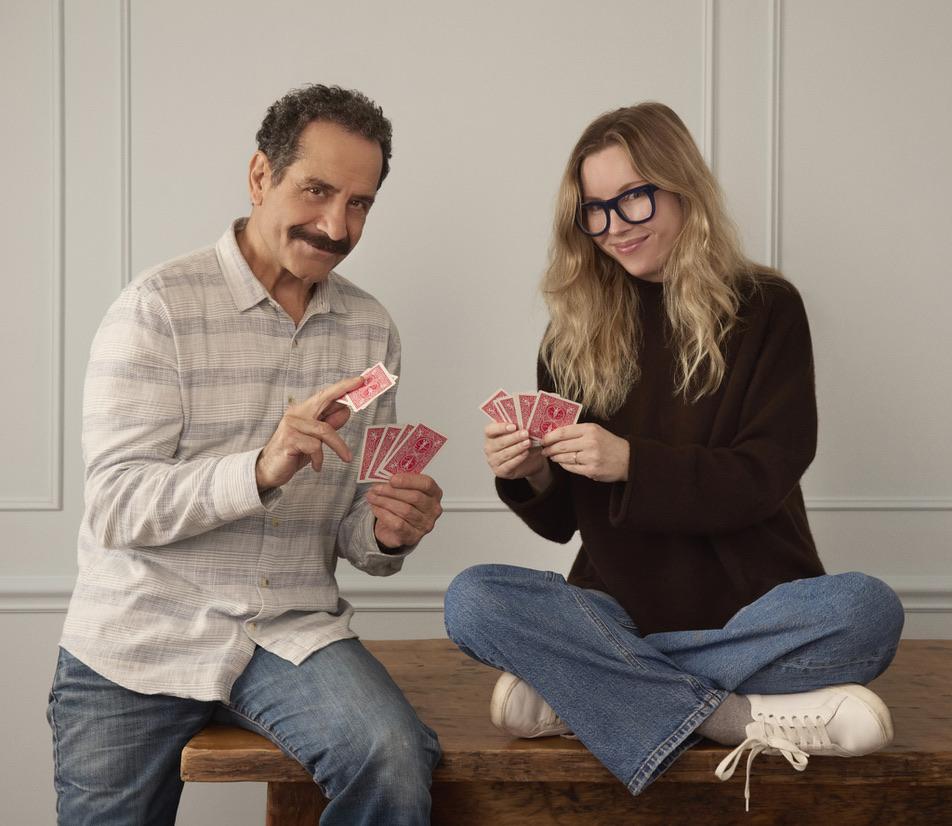
MDH: Tony’s narration is lovely. I can hear him talking in my head, and to experience a voice like that in written form is very special. But you as co-author must also have some voice on the page, right? So explain to me the gory details of how two people set out to write a book together, and not just any two people, but a father and daughter.
JA: I really love collaborative writing. I’ve always loved the process of being with someone in a room when I’m creating, whether that’s literally in the room or figuratively. Knowing that I have someone to pass ideas back and forth with is really freeing to me and takes off a lot of pressure. So the nitty gritty, gory details of working together is that it was absolute chaos, and it took us a little while to find our groove. Not that we ever disagreed or bumped up against one another, but the workflow of passing documents back and forth with one person who is very good at technology, and one person who isn’t — that was a little bumpy at first.
We sat down and had a blue-sky session where I asked what are some stories that immediately come to mind, and when he thinks of each of his brothers and sisters, what is he reminded of? So everybody got a little bit into the book. I would give him prompts like, “What is your earliest food memory?” I really enjoyed coaching my dad and getting his stories out of him. He always took the first pass at a chapter, and then he would send it back to me and I would expand it. For example, if he wrote, “I walked down to the water,” I wanted to know what the weather was like that day. What did it look like, what did it smell like? And I would expand it. So, he would give me the story beats and have his humor and his voice in his first pass, and then I would dive into it deeper.
It meant I had to play all the characters: my dad, my grandparents, my aunts and uncles. Sometimes my dad would go, “I can’t believe you captured my mother; how did you know that without having met her?” I think I was able to do it because I know my dad so well, and I’ve heard him talk about these people my entire life. I also understand him in a way that I don’t think another “ghostwriter” would be able to. We have this joke where he always refers to it as my book, and I always refer to it as his book, and we go back and forth. At this point, we don’t know who wrote what — we genuinely have no idea. It’s so blended we don’t know where one starts and the other ends.
MDH: Do you think only a family whose history starts with such insecurity can stay focused on developing the kind of bonds that have endured over three generations in your family? And what advice do you have for people who read this book and think, “I want that for my family”
JA: I think all different types of family are valuable and special. Our family is particularly big and close, but even if you aren’t close to your family or have a very small family, whether that’s biological or inherited or chosen family or friends, it’s really important to show up and show people that you love them and appreciate them and not just tell them. That’s what our reunion is about. It’s not just sending a text and saying, “Thinking about you, I love you.”
Although that’s wonderful, it’s about showing up and working hard for other people, cooking for someone else, picking up something that you see is needed, and acts of service. And no, I don’t think that your family has to have an origin of suffering and hardship in order to be close. My family’s story, since it is an immigrant story, did start with a lot of absence. In their case, their continued traditions and efforts to stay together is absolutely influenced by how very close my family came to not existing at all. What I think keeps it together is creating new memories and effort, and that’s what this book is about.
MDH: It’s almost like a manual.
JA: It’s a manual, yeah. Get together, play a game, eat. Don’t always talk about the hard stuff. You can’t talk about the hard stuff when your mouth is full of food.
MDH: True, true! As a step-adoptee, I was especially taken by the few references to the way you and your adoptive dad formed such a close bond. My favorite passage is of Tony describing your first time attending the family reunion after he married your adoptive mother. He’s in the lake spotting you jumping off the raft: “When she hit the water, everything in me lifted… like a rush of joy that not only connected me to my four-year-old self, but in an instant locked her soul to mine and to those of my parents and redefined my entire concept of what it means to be a father. It wasn’t just that she’d done something brave. It was that she trusted me enough to do it. That she believed the water would be okay because I was already in it. That shifted something in me. That’s the job, I realized. You’re the safe place. You’re the one they leap toward when the water looks cold.” Did you discuss whether to write more about his adoption of you or is this a subject matter for future writing?
JA: That passage is also my favorite passage in the book. I know I said we don’t remember who wrote what, but for this passage, I remember exactly who wrote it. My dad wrote the first part and ended at “…what it means to be a father.” What came after was written by me remembering how it felt to have my dad be my safe place. I was condensing that feeling into that moment, and it was really special to be able to go back to my three-year-old self and read my dad writing how he felt about me and then tapping into how I feel being his daughter. So that passage is a perfect example of how we wrote together. It’s magical being able to time travel like that.
MDH: It really is.
JA: I identify strongly as an adoptee, and I think it gives perspective into my life, where I am the daughter of a very successful beloved actor, but I almost wasn’t. There’s a lot in my dad’s story of his father coming over from Lebanon and there was an alternate possibility of how that could have gone. For me, there was also an alternate possibility of how my life could have gone, and I am very interested in that. Even though I’m adopted, my dad and I didn’t discuss having more stories about me and my sister — who is also adopted — in the book. The book isn’t about us. It’s about his whole family, and remembering the best moments of the relationships he had with members of his family. My adoption story is my own story, and I am working on my own memoir.
You know, there’s this narrative for adoptees that they need to always be grateful, but there is also an absence and a sadness and a trauma that isn’t often discussed. If you are adopted that means someone wasn’t able to or didn’t want to raise you. I only recently have been able to look at that and hold two truths. I’ve spent my life wondering, is it okay for me to talk about the darker psychological issues of being adopted when the outward appearance is that I am the luckiest person in the world? My dad is a very private person and he has gone through a lot of effort to not exploit his family and his private life, and I respect that so much. But there’s also my own story and having a difficult period in my teenage years, and my own psychology and mental health struggles around what it’s like being adopted by affluent but private celebrities. There’s no exposé here, it’s just reality.
MDH: Yes, I get that. I feel strongly that everyone has the right to their origin story. I’m happy to hear you’re writing a memoir and I look forward to reading it. I enjoyed the one chapter written only by you entitled “A Note from Josie” and wanted more. What else are you working on?
JA: I’m always working, daydreaming, and writing. I have a middle grade eco-fantasy series that I wrote with my co-author Kati O’Hearn, who is also head of development and creative at my production company, House of Water. I love writing for children, and I love reading books written for children. I think it’s such a great honor to be able to be in the hearts and minds of developing humans. My dad and I are also at work on an illustrated children’s book. I have a couple of essays forthcoming in The Cut and LitHub, and there are a variety of film and TV projects I’m actively developing and pitching. I have a couple novel projects that are in the drawer while I prioritize the memoir. I’m also a prolific sleep story writer for Audible.
MDH: Is a sleep story something I’d listen to if I have insomnia because I can’t shut off my brain at night?
JA: That’s exactly it. They are charming, prosaic stories that don’t have a beginning, middle, or end, and are very atmospheric and cozy. I love writing them. The pressure is very low to have a good plot and I get to really dive into the magical worlds that I want to live in.
MDH: That sounds like something I could use. Josie, thank you and have a great book tour!
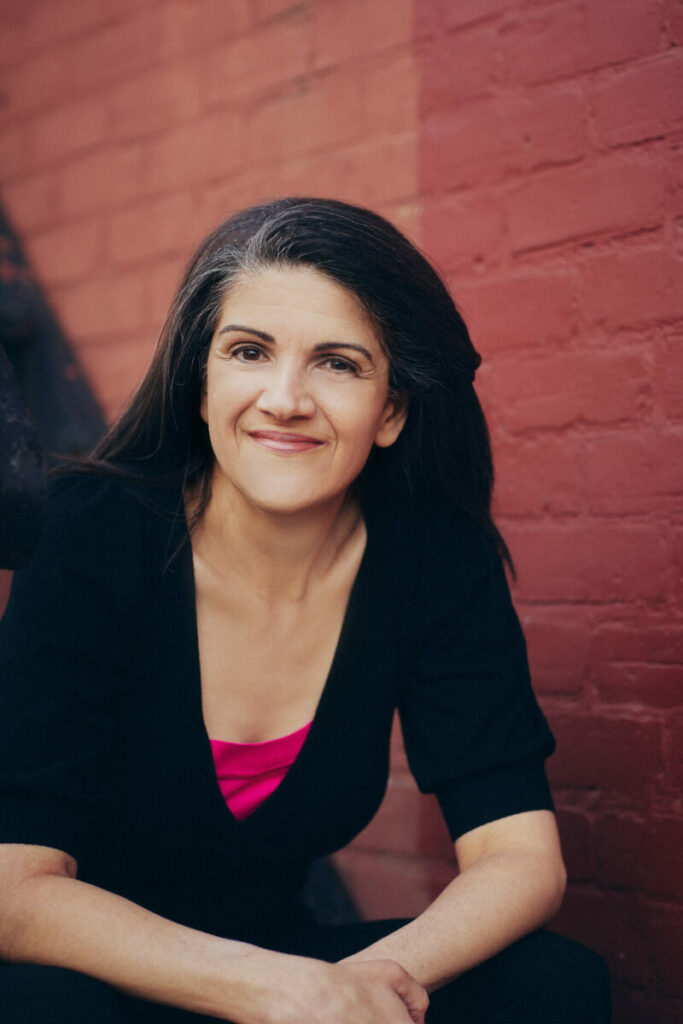 Michèle Dawson Haber is a Canadian writer, potter, and union advocate. She lives in Toronto and is working on a memoir about family secrets, identity, and step adoption. Her writing has appeared in Manifest Station, Oldster magazine, The Brevity Blog, Salon.com, and in the Modern Love column of The New York Times. You can find her at www.micheledhaber.com.